
Painting process | End of the Day at the Bottom of the Eyre Peninsula
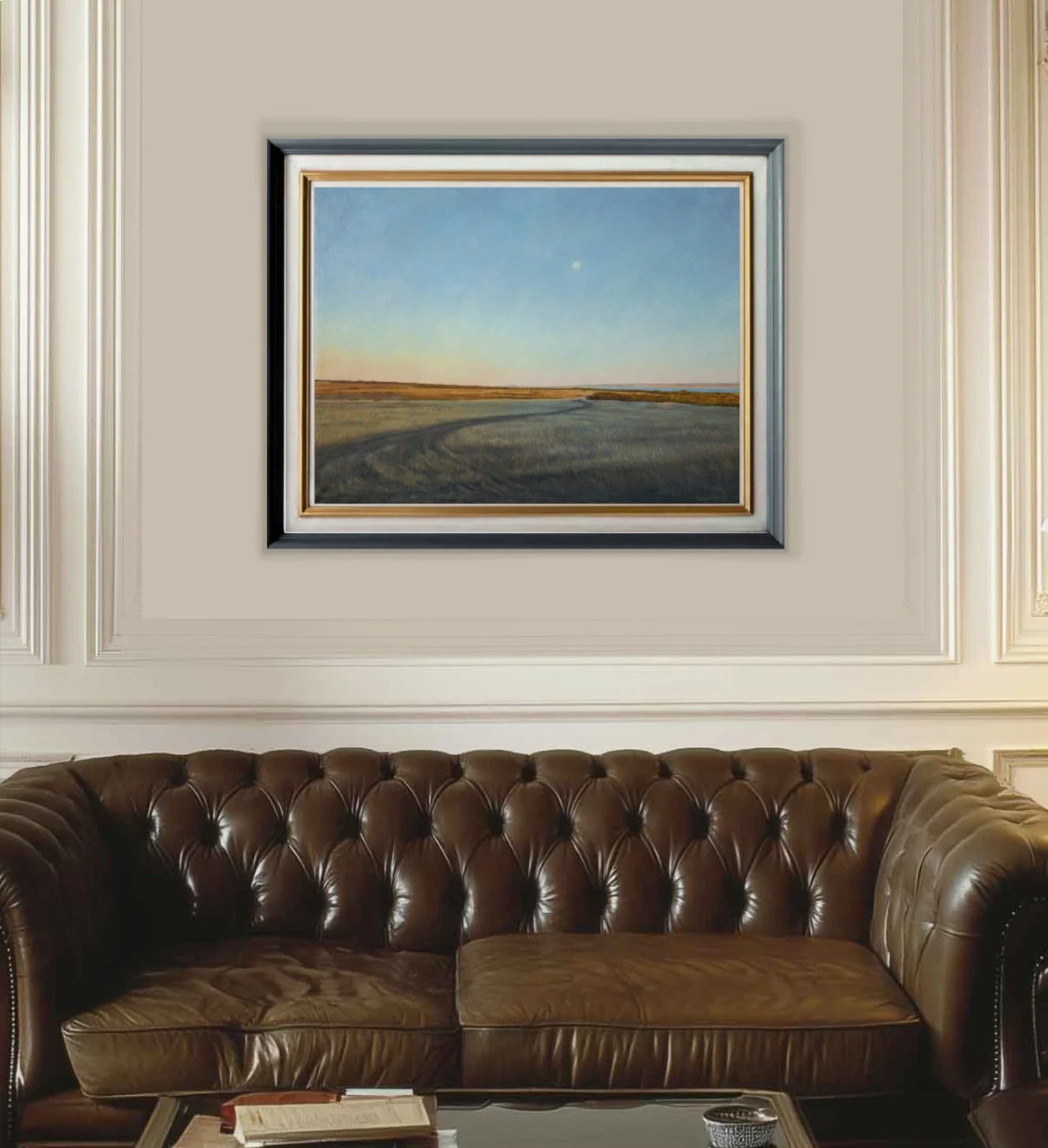
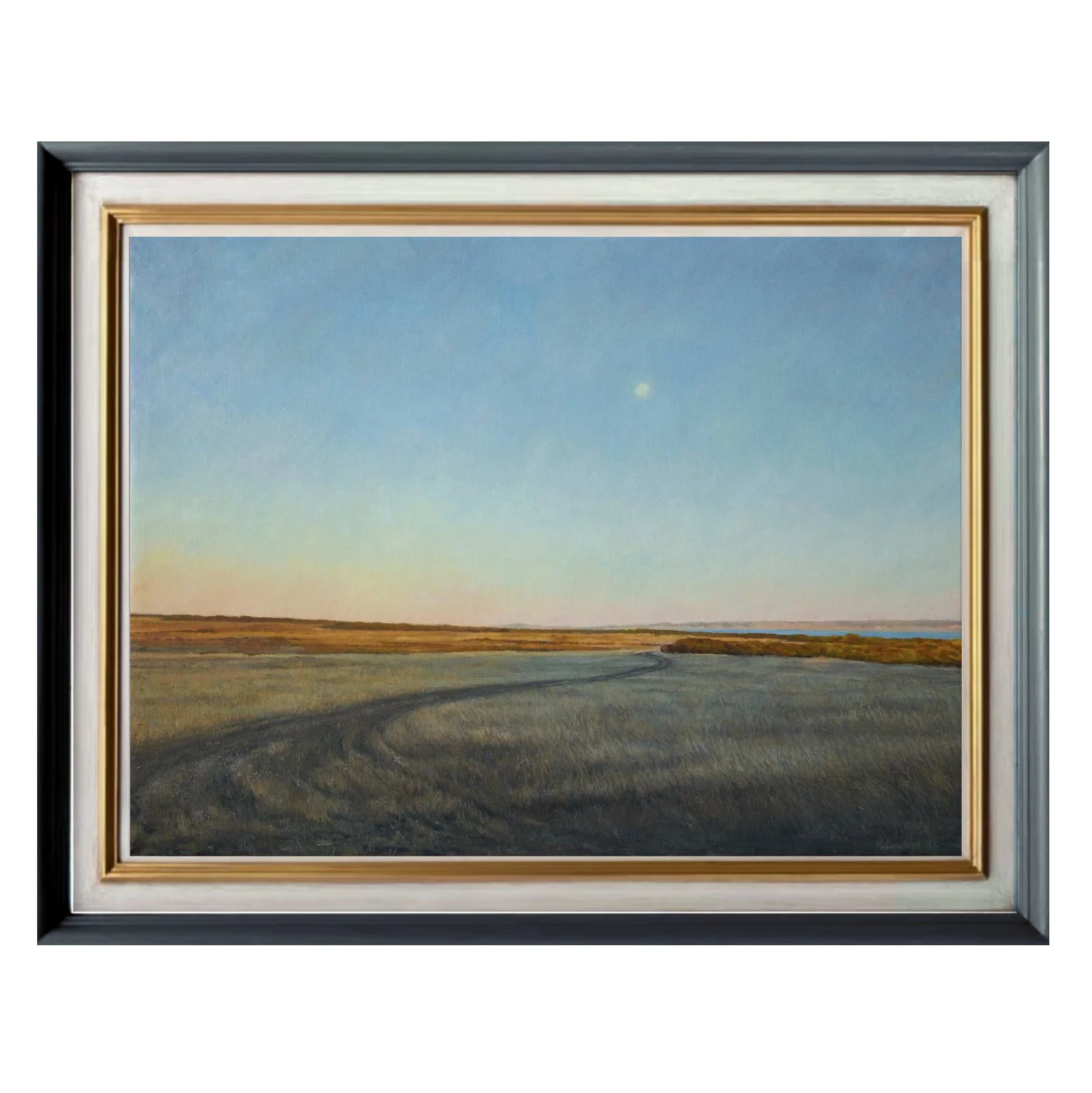
The Eyre Peninsula in South Australia has such a wild, isolated beauty. I was staying on a farm right at its tip, where it felt like we were the only people in the world. I went for a walk to look for emus at dusk as the moon was rising. The way the final rays of sun made the distant paddocks golden orange was so striking under the grey-blue sky. The sliver of The Bight that I could see in the distance glowed a surreal blue. I knew I wanted to capture this moment in paint.
This painting was a challenge in subtlety. There are no cast shadows, no super dark darks or bright highlights. It’s all about quiet stillness created through careful variation in colour temperature and compressed values.
You can watch the full time-lapse by clicking the image above.
Preliminary sketches and studies
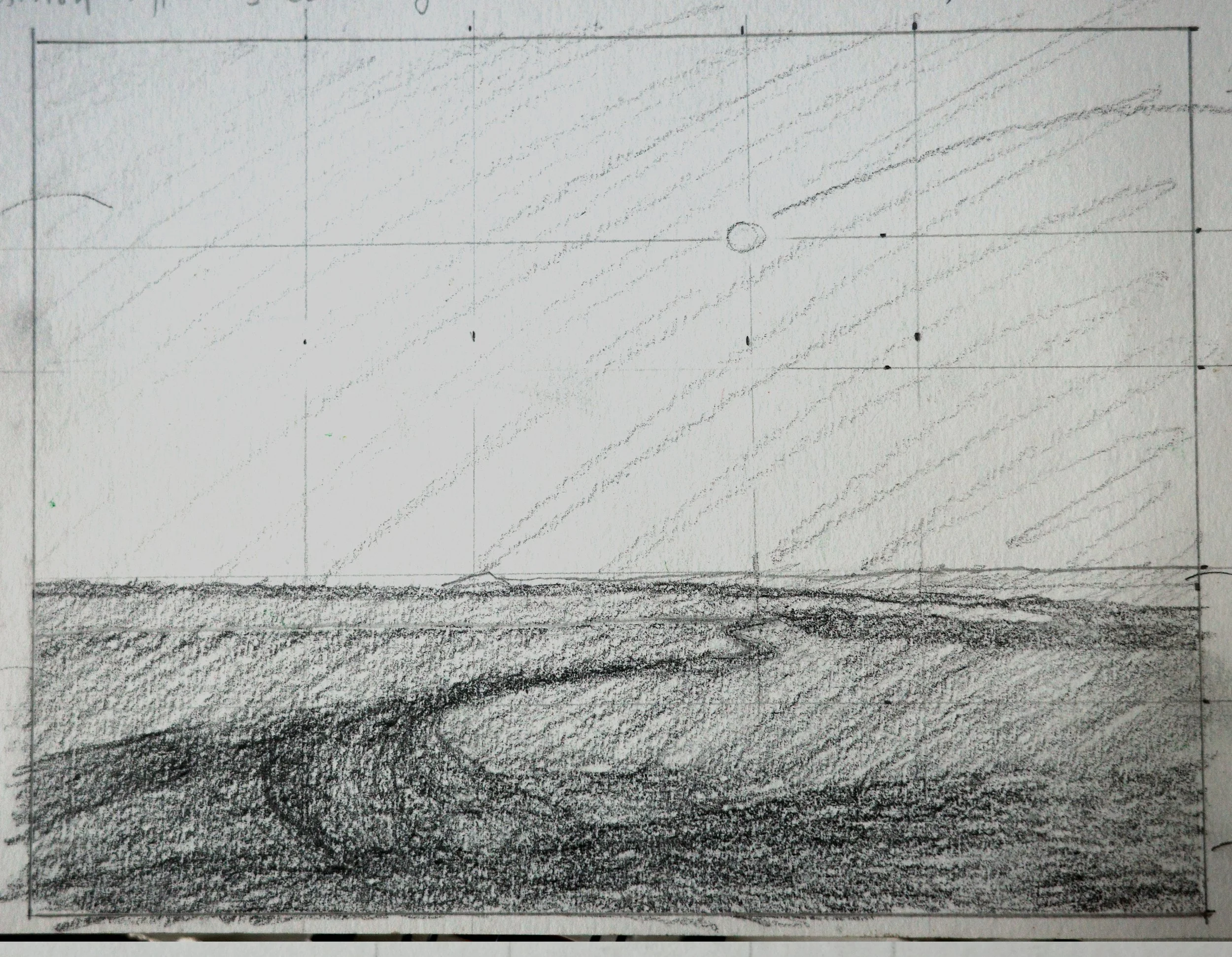
I started with a quick pencil sketch to work out the composition. I rearranged the moon to place it at the end of the track. The curve of the track pulls your eye in to the distance.
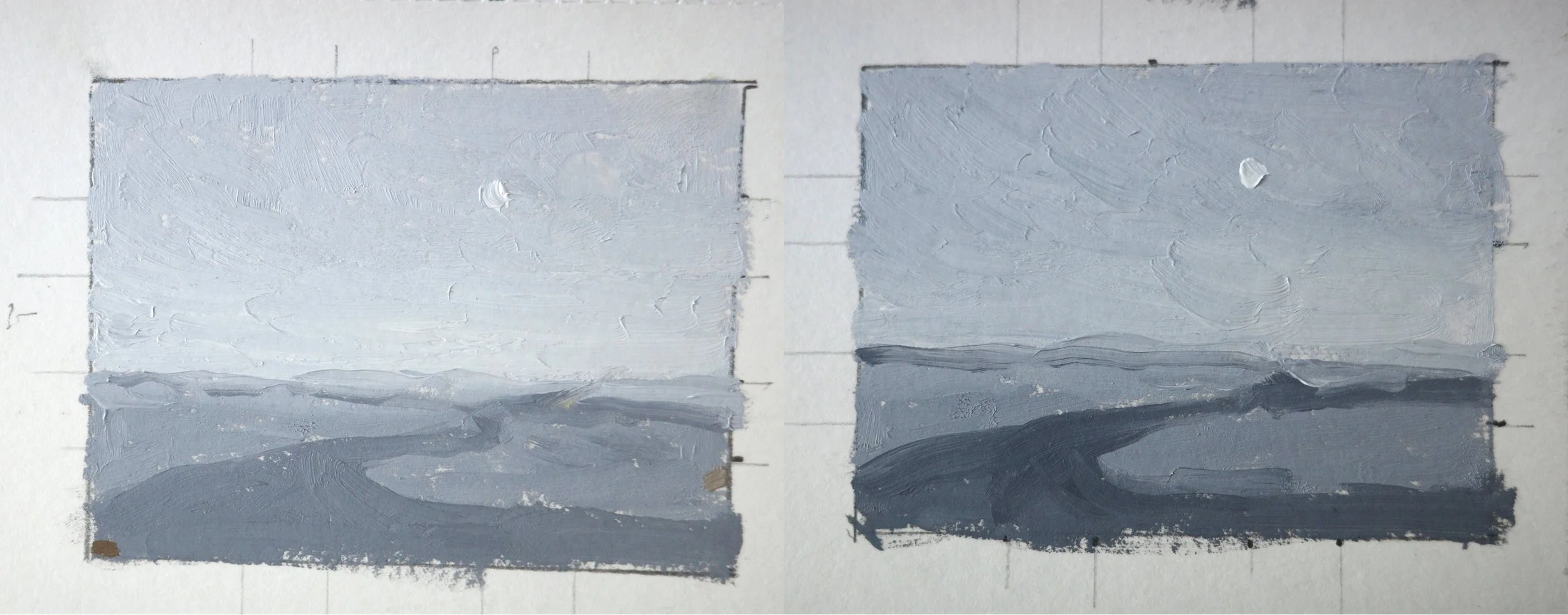
Next, I painted these little value studies to define the value relationships. This scene requires compressed values, with nothing at either end of the scale.
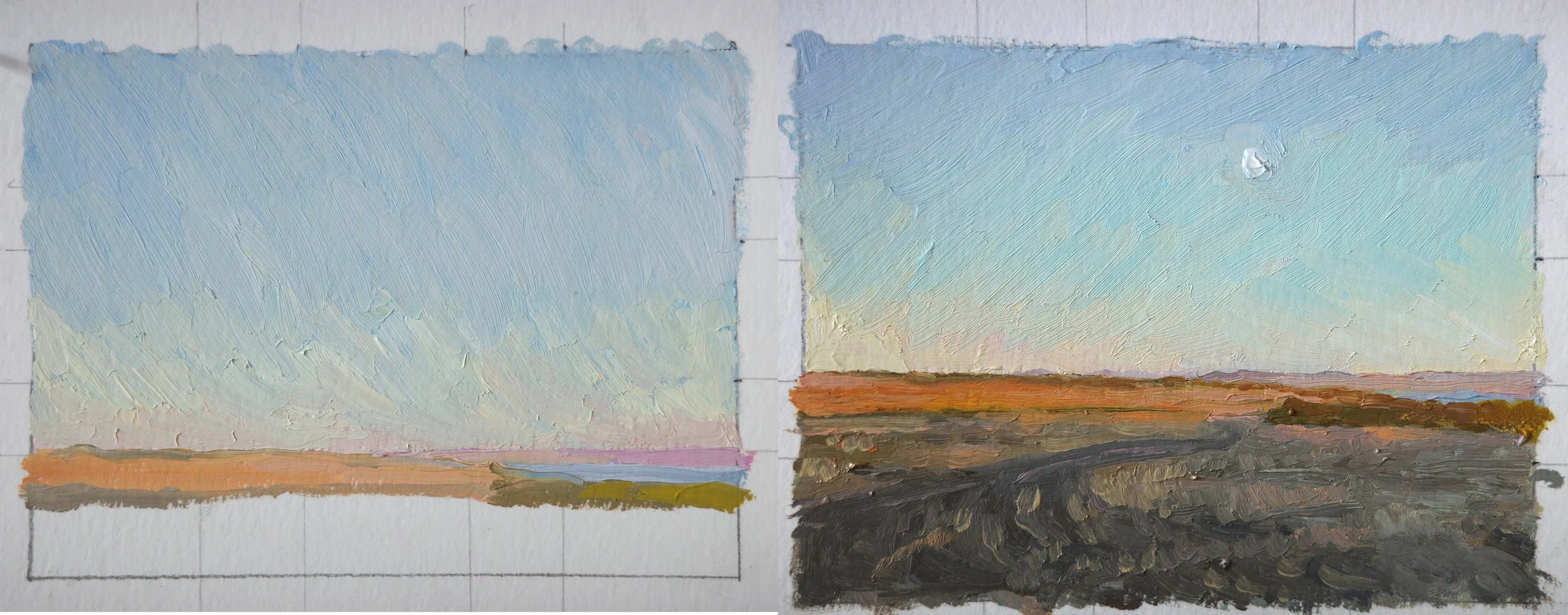
I then did these little colour studies. I abandoned the first one when I realised I’d put the horizon line too low!
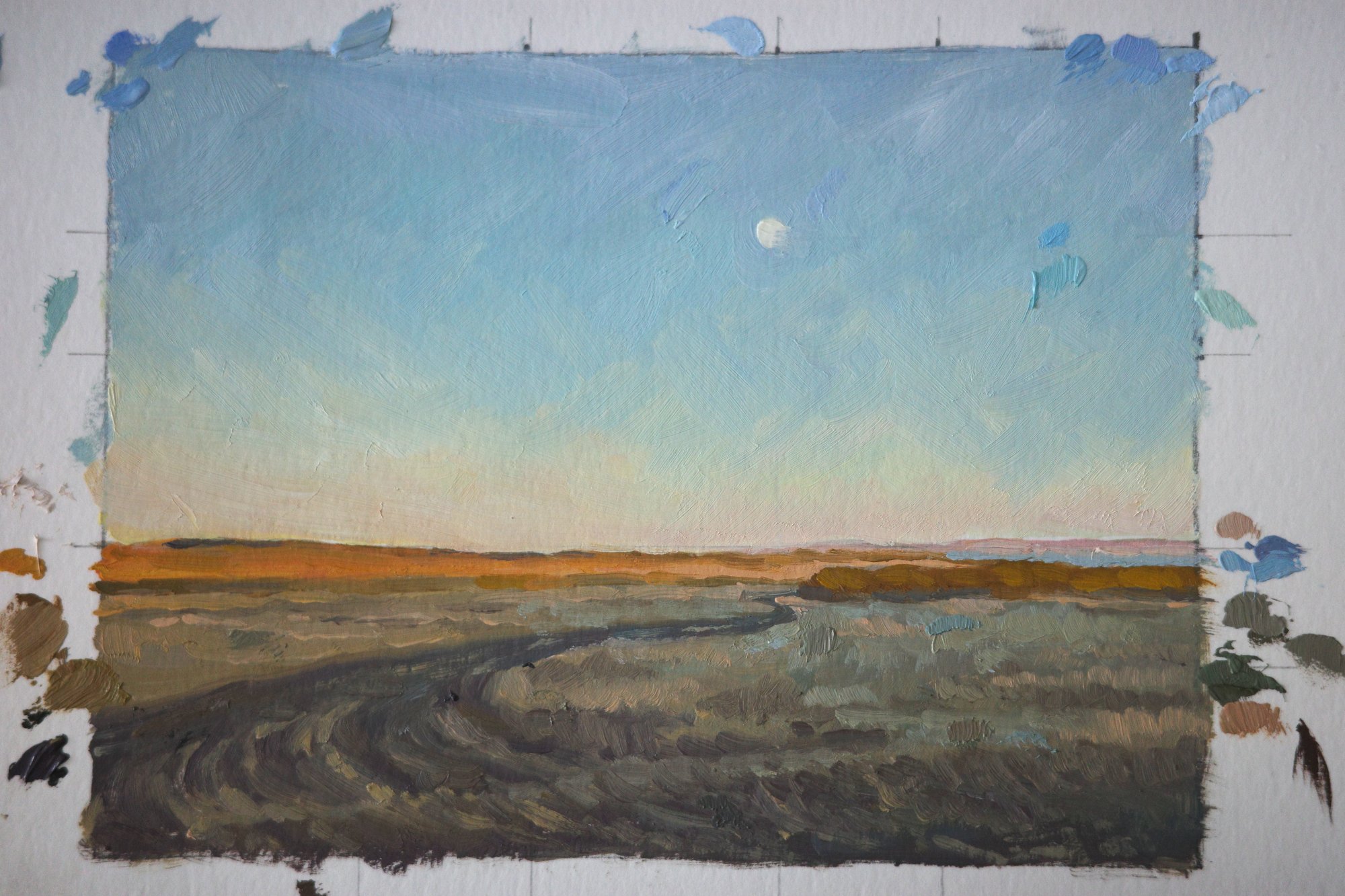
Finally, I did a much larger colour sketch. I picked out blues, pinks and yellows in the foreground grasses that are reflected from the sky.
The painting process
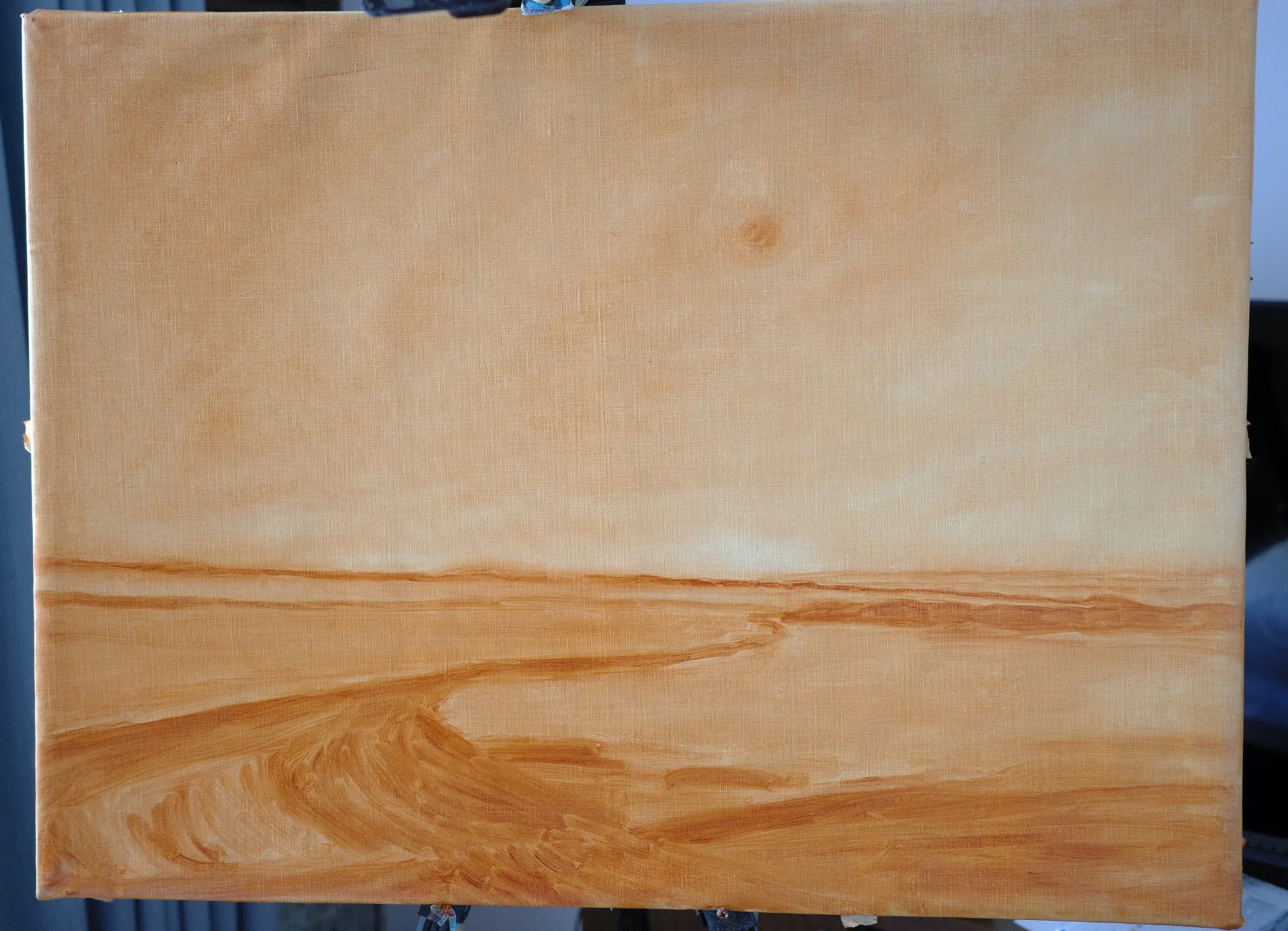
This was the start of the painting, where I placed the big shapes of the painting in using burnt sienna paint.
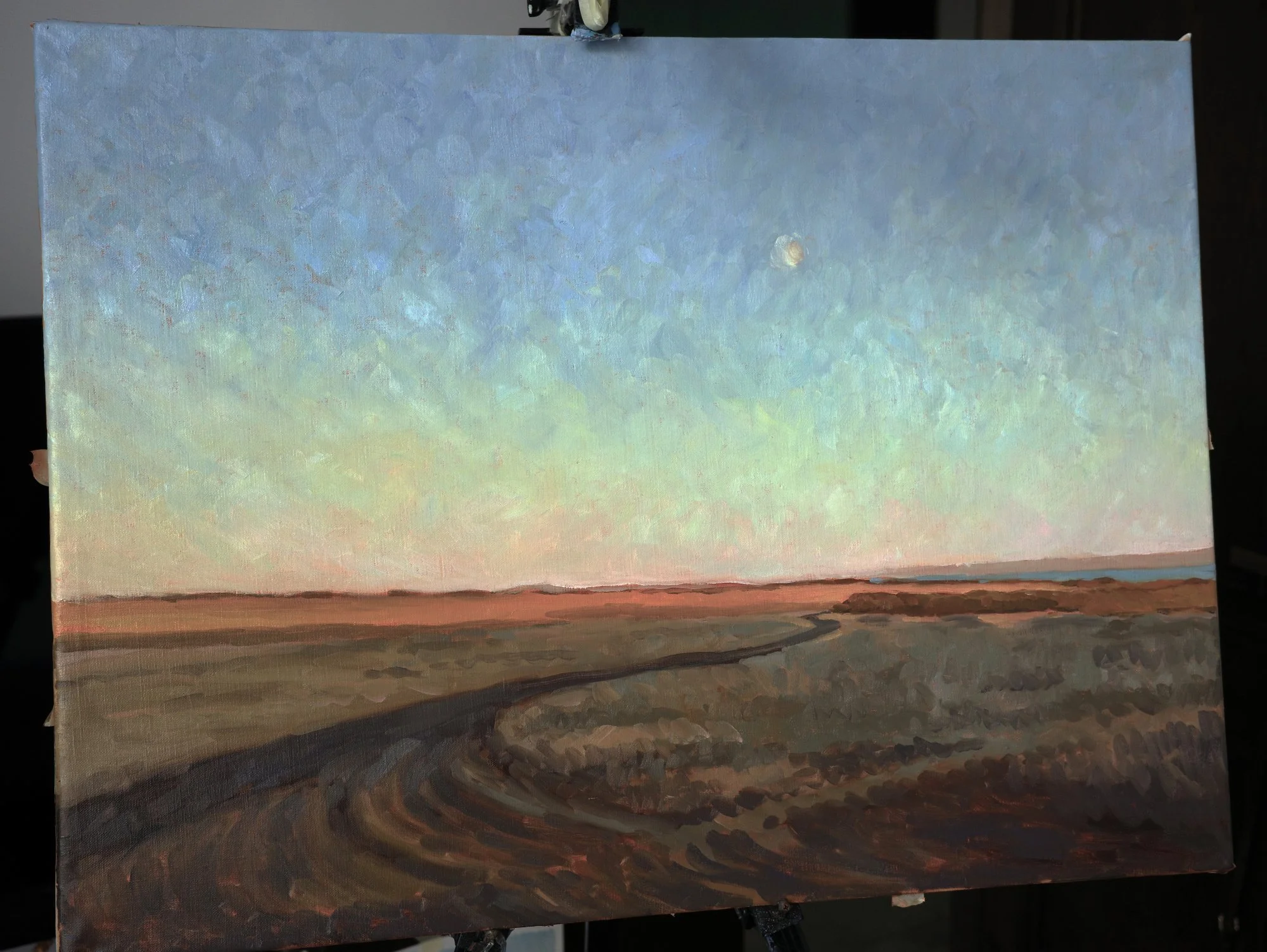
Here is the first finished layer. It’s rough, and busy. But this first layer lets me then compare relationships to refine them.
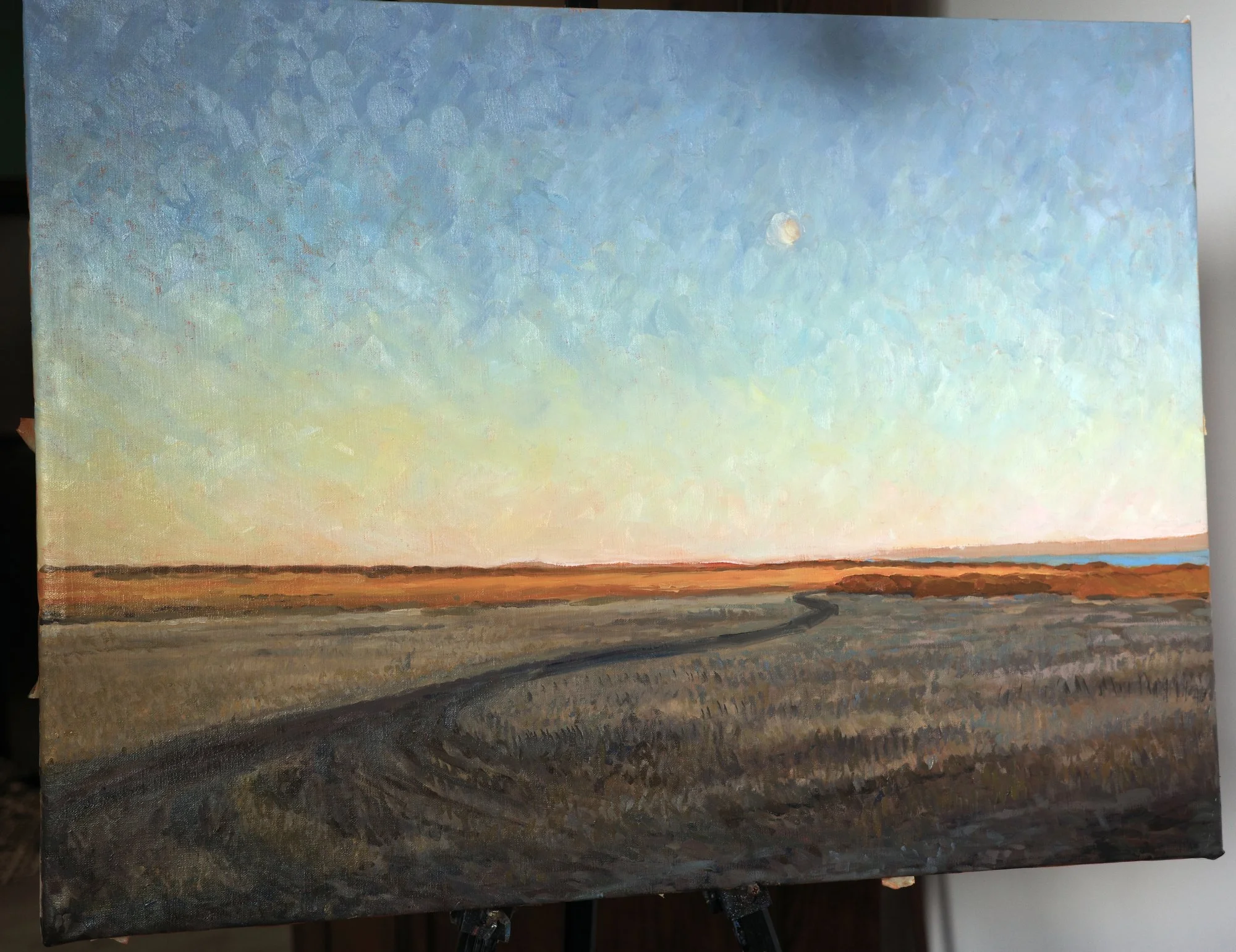
I began adding shape and variation in the grass. I noticed that the left side of the grasses capture the golden glow of the sun, just as the pinks and yellows in the sky on this side are warmer. On the right the grass reflects more of the blues from the sky. I started picking these colours out at this stage.
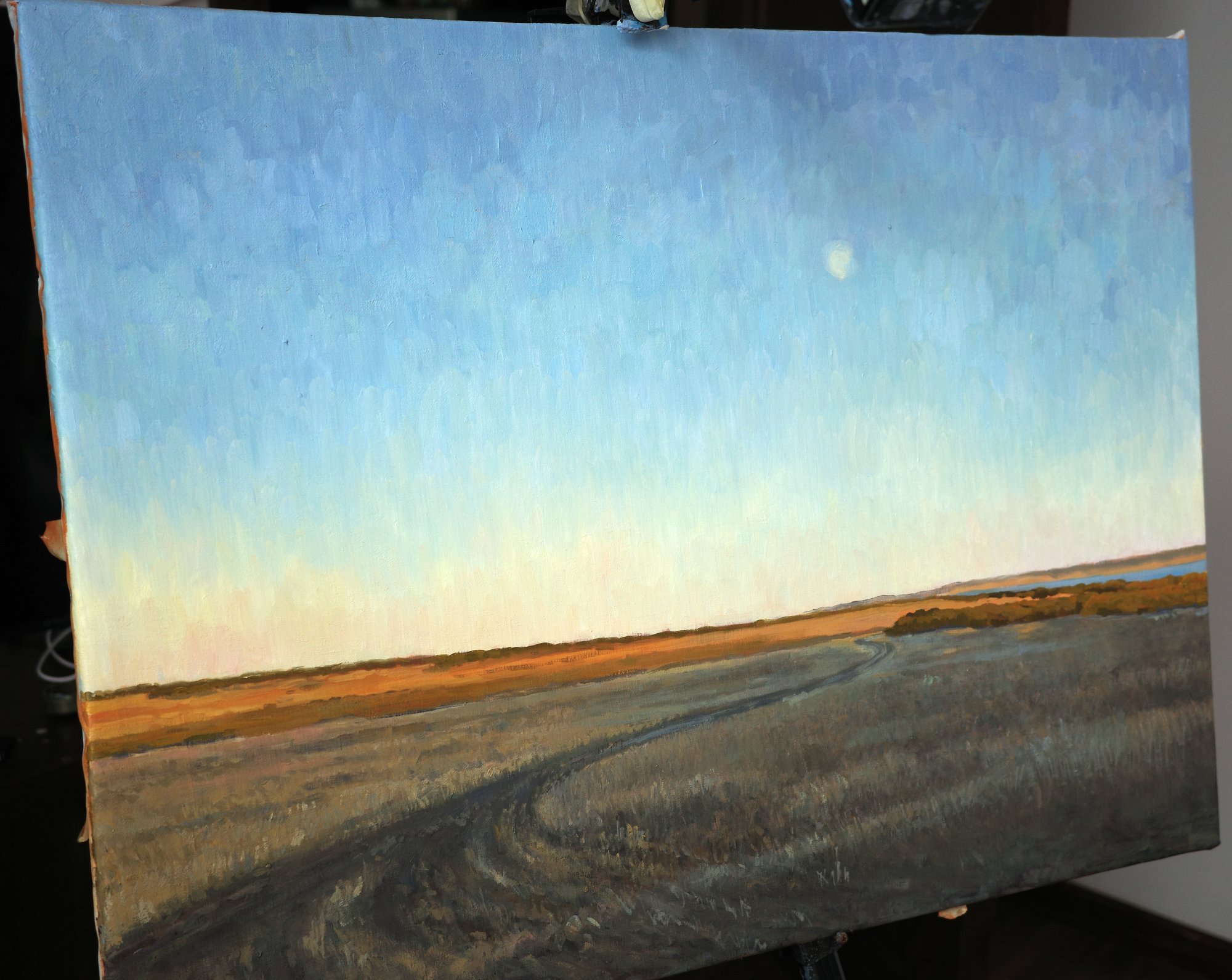
I wasn’t sure how to treat texture in this painting. At first, I went with a textured, interesting sky and softer grasses. But here is where I decided to swap this relationship. I started to soften the gradient in the sky and build up texture in the grass. This choice creates a feeling of stillness in the painting by getting rid of the busyness in the sky. Adding more variation in the grasses helps create depth, with the detail gradually dissolving as it recedes.
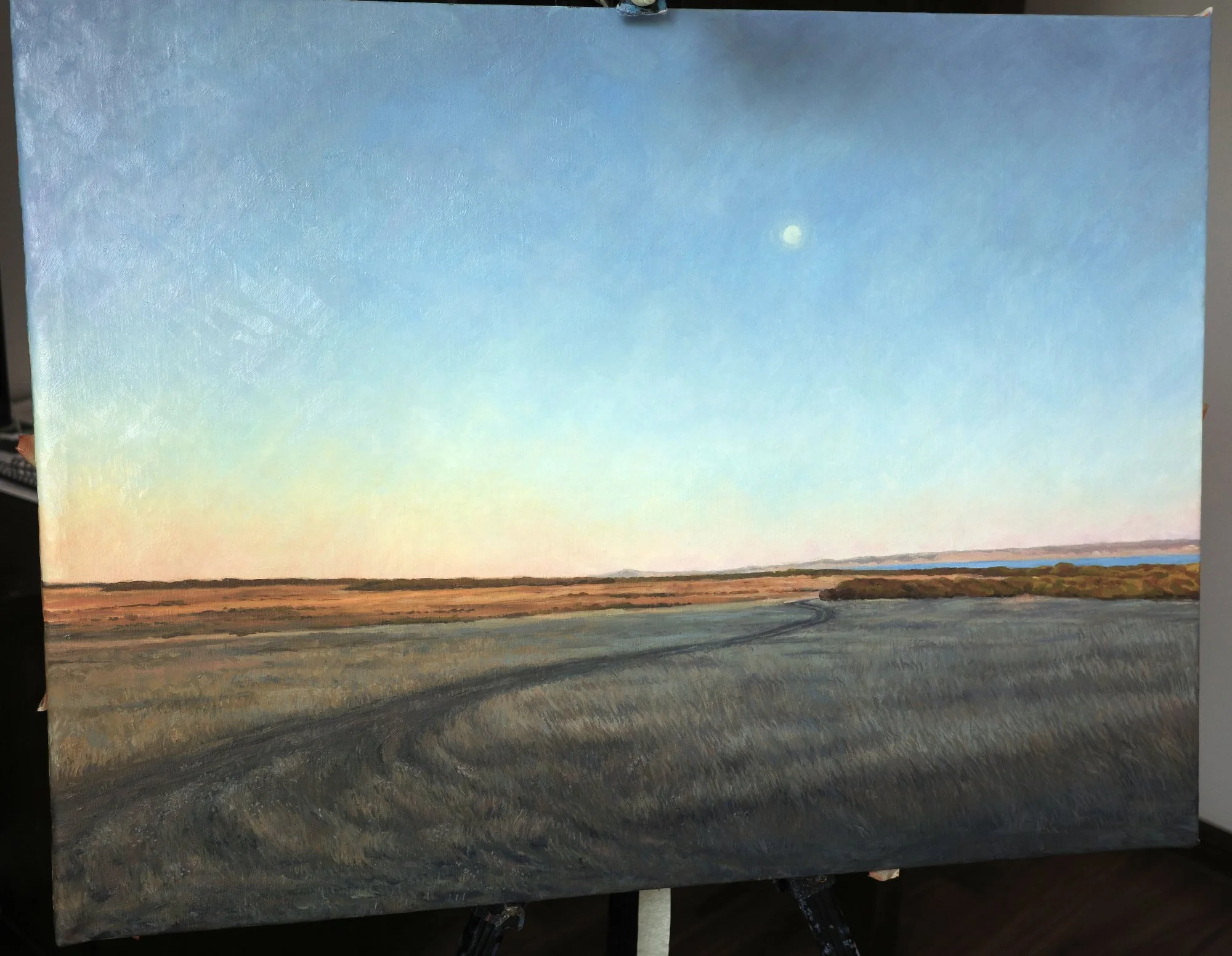
I spent a long time working on the foreground curve of the road. I softened the edges and pushed the texture so it feels like it sits down in the grass. I layered so many strokes of different colours to create tire tracks through the grass that overlap believably. It was a balancing act of creating the illusion of grass texture without literally painting every stalk of grass.
Finished!
"End of the Day at the Bottom of the Eyre Peninsula"
80×60cm, oil on linen
This painting really threw me out of my comfort zone. It made me slow down and really observe the subtle shifts I’d noticed that evening. I loved capturing the way warm and cool tones interact without drama.

Details
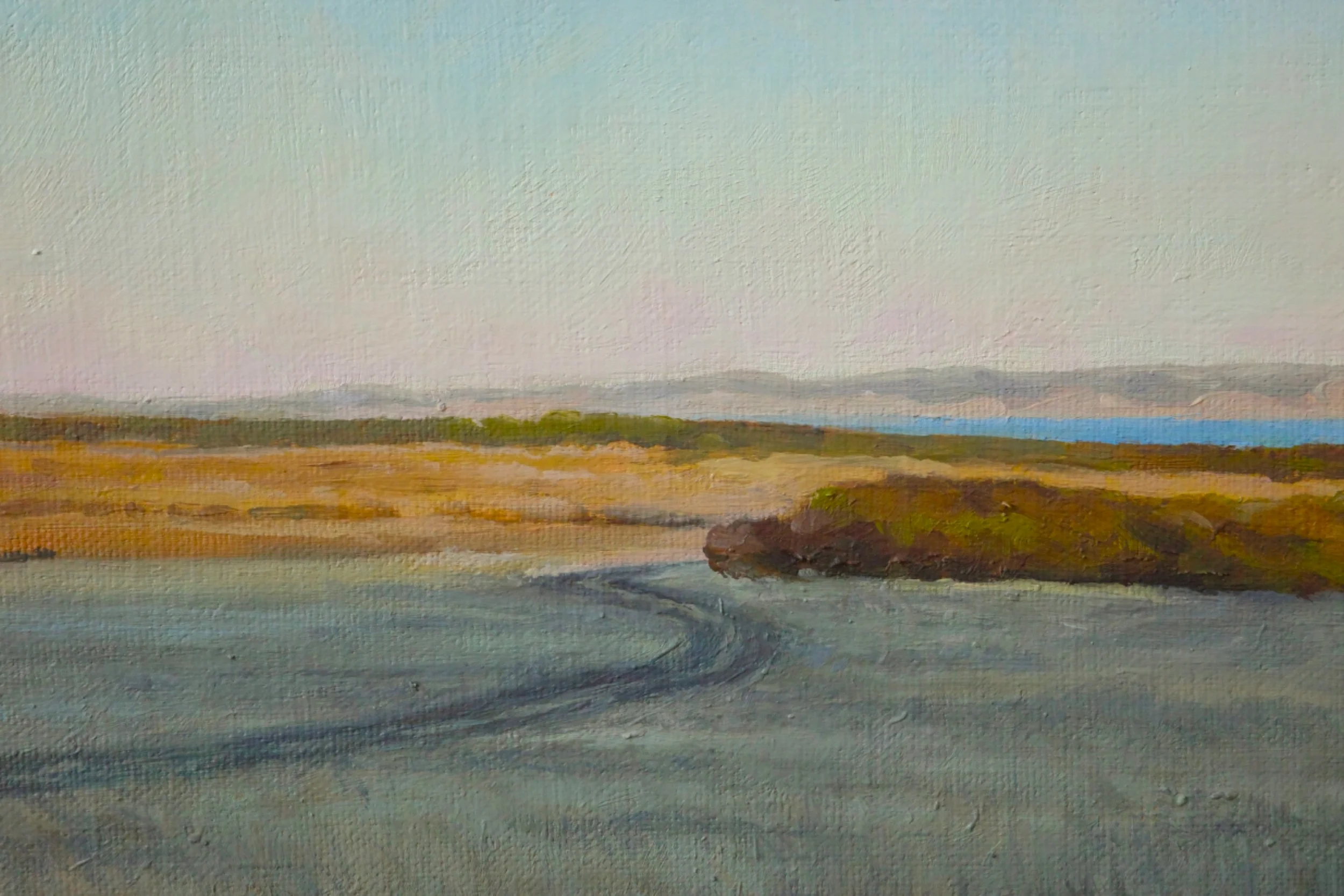
I love this intersection of colours, layering as they recede into the distance. For such a subdued piece, there are some moments of bright colours, and they all come together here.
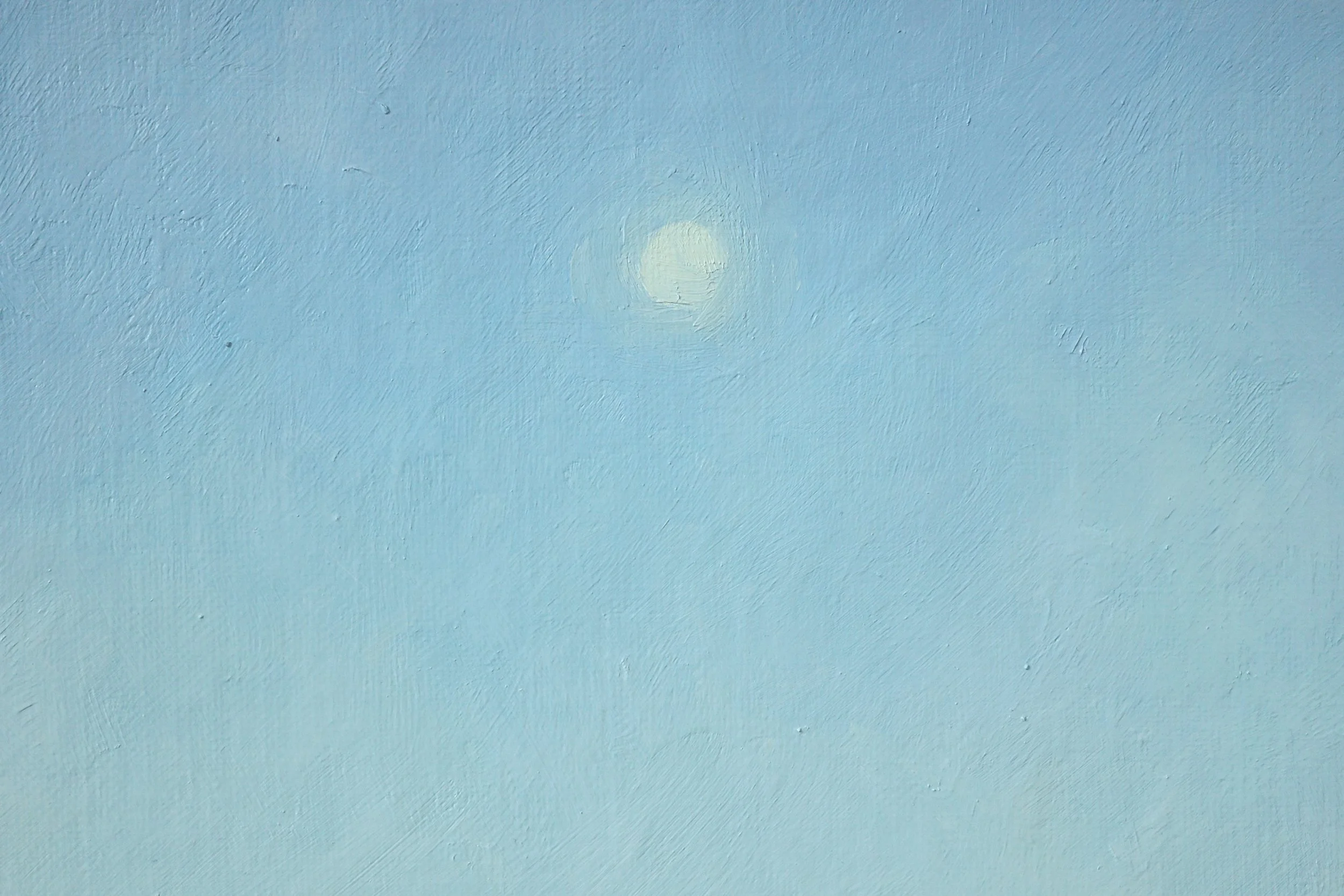
Adding the moon in took a long time to get right, because I wanted it to look like it’s effortlessly hanging in the sky. Sometimes to make something look spontaneous it takes even more work! I like that you can see the swoosh of the brushstrokes and a slight glow around it.
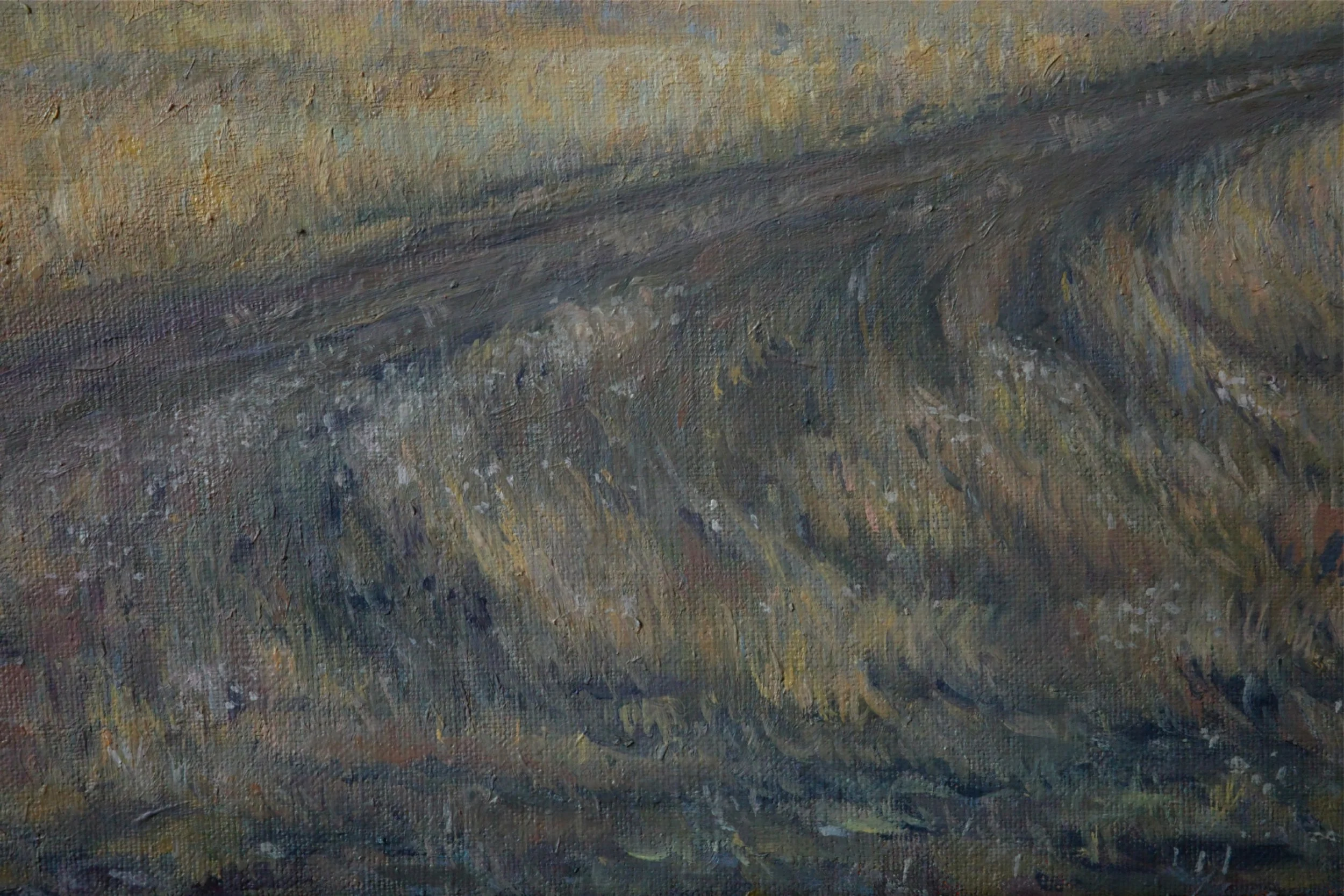
I enjoyed the slow process of layering the colours to create the grass texture. There’s so much hidden colour in a field that on first consideration just looks grey. The sunset colours in the grasses reveal themselves as you spend more time looking at this painting. It’s almost meditative.
This painting is now available in my new collection, At the End of the Day.
The Eyre Peninsula in South Australia has such a wild, isolated beauty. I was staying on a farm right at its tip, where it felt like we were the only people in the world. I went for a walk to look for emus at dusk as the moon was rising. The way the final rays of sun made the distant paddocks golden orange was so striking under the grey-blue sky. The sliver of The Bight that I could see in the distance glowed a surreal blue. I knew I wanted to capture this moment in paint.
This painting was a challenge in subtlety. There are no cast shadows, no super dark darks or bright highlights. It’s all about quiet stillness created through careful variation in colour temperature and compressed values.
Click here to see the process behind this painting
Details
Medium: Oil on linen
Size before framing: 80 × 60cm
Approx. size after framing: 100 × 80cm (depending on design)
Included With Your Painting
Your painting will arrive expertly framed and ready to hang. International shipping is included.
I also include a ‘Story and Care’package to help you display your painting beautifully, look after it easily, and share the story behind it.
It includes:
Premium handmade and hand-finished custom framing
A beautiful hardcover story book documenting the inspiration and creation of your painting.
Original sketches and studies
Signed certificate of authenticity
Curated hanging and care kit and guide
Custom greeting cards
Custom decks of playing cards
Fully insured worldwide shipping
How To Buy
Click “Enquire to Buy” and fill in the form. I’ll personally confirm availability, answer any questions, and send you a secure invoice.
Delivery and Returns
Framing and delivery typically takes around 12–14 weeks, depending on the design and time of year.
I offer a 90-day money-back guarantee. You can read more here.
