
Painting process | Long Evening Shadows, Adelaide Hills
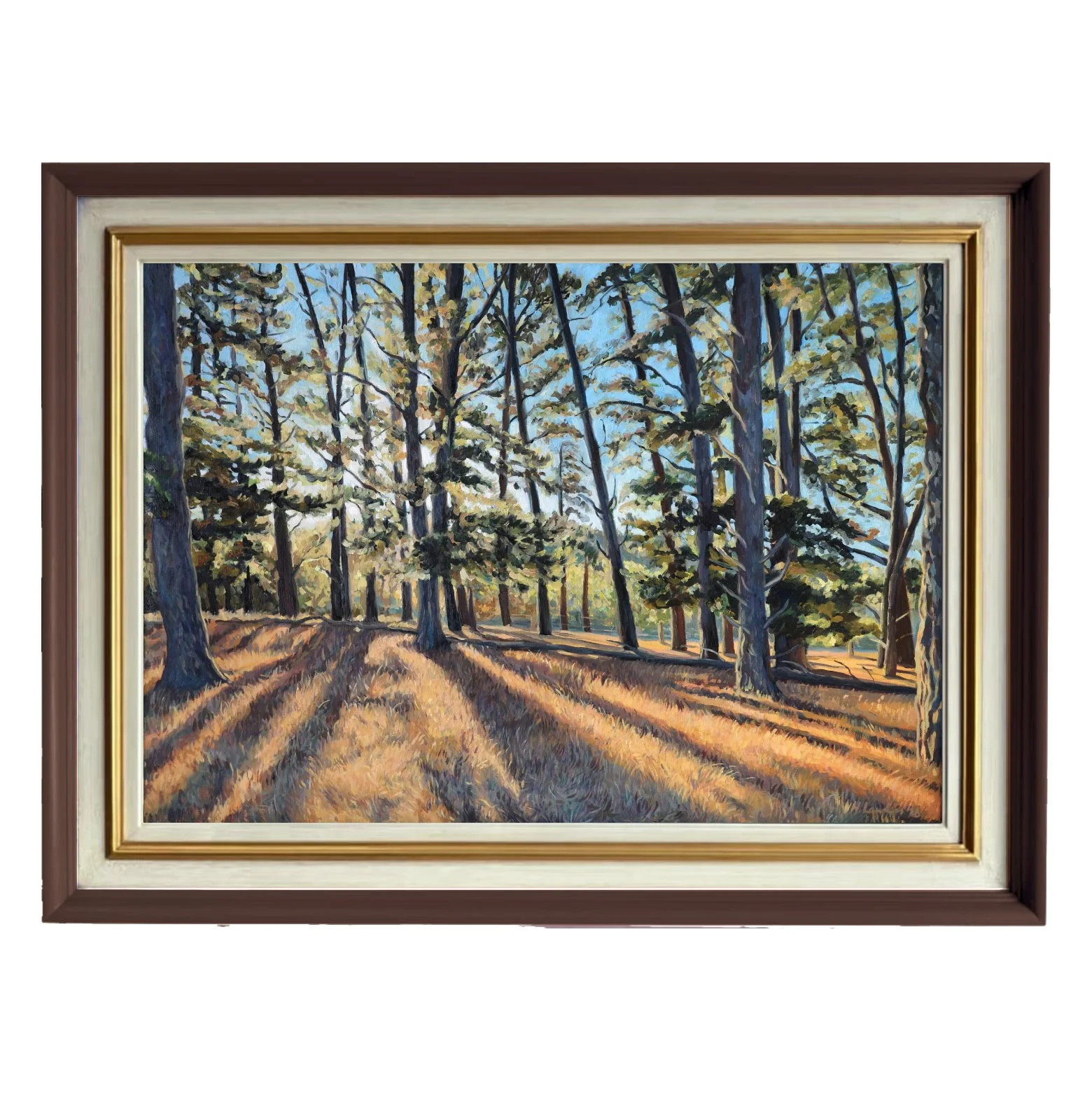
I was strolling around a vineyard just outside Lobethal when I came across the light cascading through a cluster of pine trees on its edge.
I was intrigued by the pattern created by the repeating vertical and diagonal shapes. But really, this piece is all about that low light casting bold blue shadows at the end of a hot summer's day. I can almost smell those pine trees.
You can watch the full time-lapse of this painting by clicking the image above.
Preliminary sketches and studies
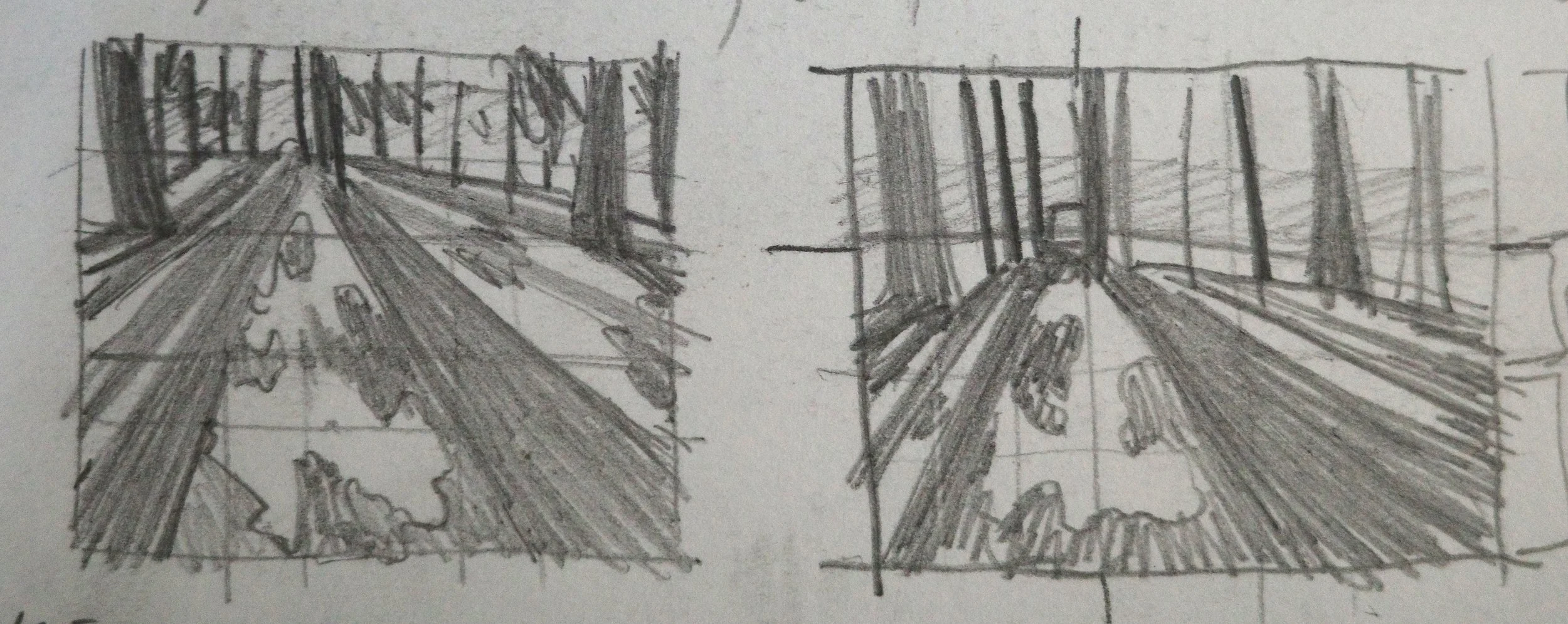
The shadows were what caught my eye to paint this scene, so I wanted to experiment with enhancing them by pushing the horizon right up to the top of the canvas.
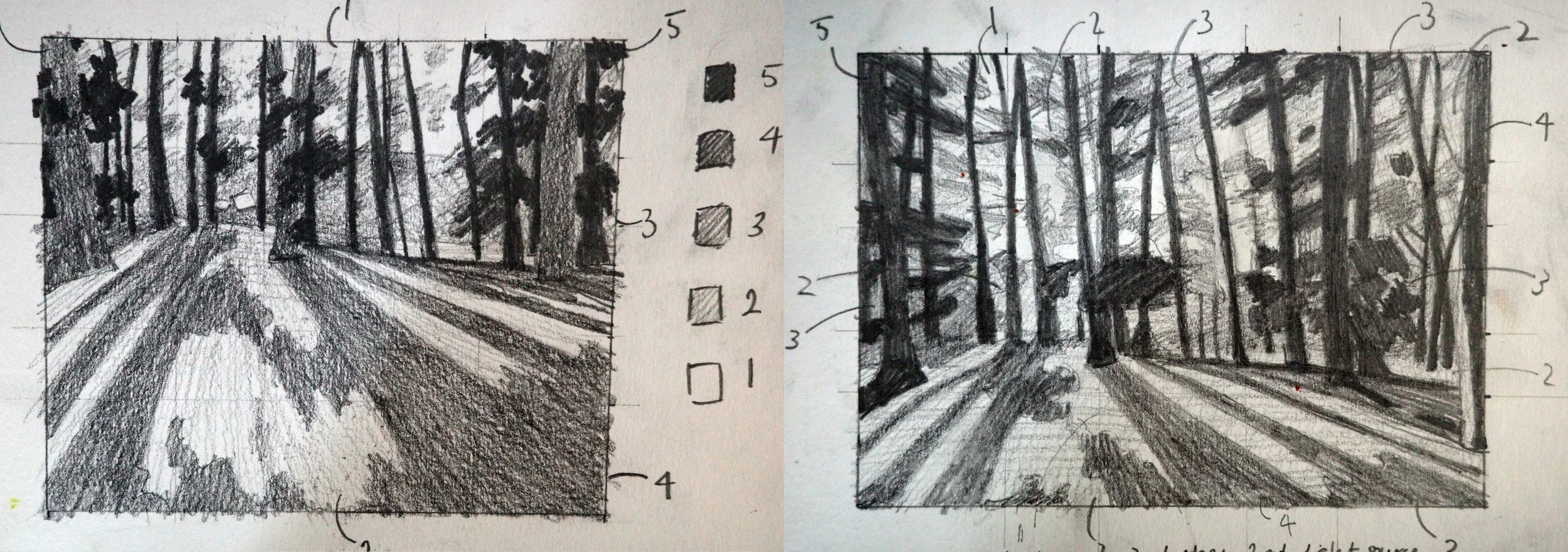
I couldn’t decide between these two compositions, so I drew them both to see which one would hold up in black and white.
I was torn between letting the shadows dominate or be part of a unified scene. Eventually, I decided that the version with the lower horizon was more balanced and better included the context of the light coming through the trees.
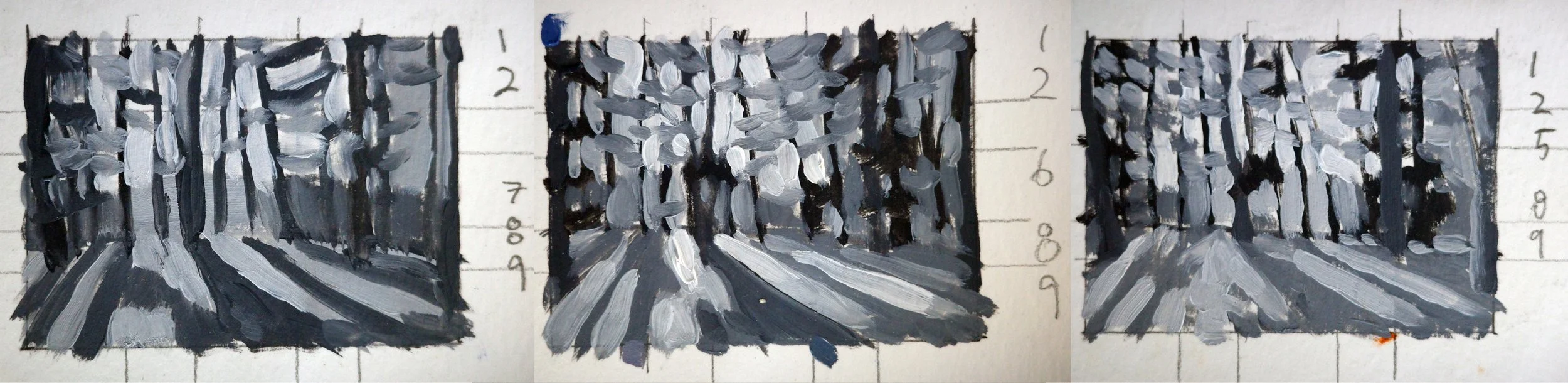
The values were crucial here to make the light, coming straight at the viewer, feel believable. I tested out different value relationships, particularly focused on how dark the middle value should be.
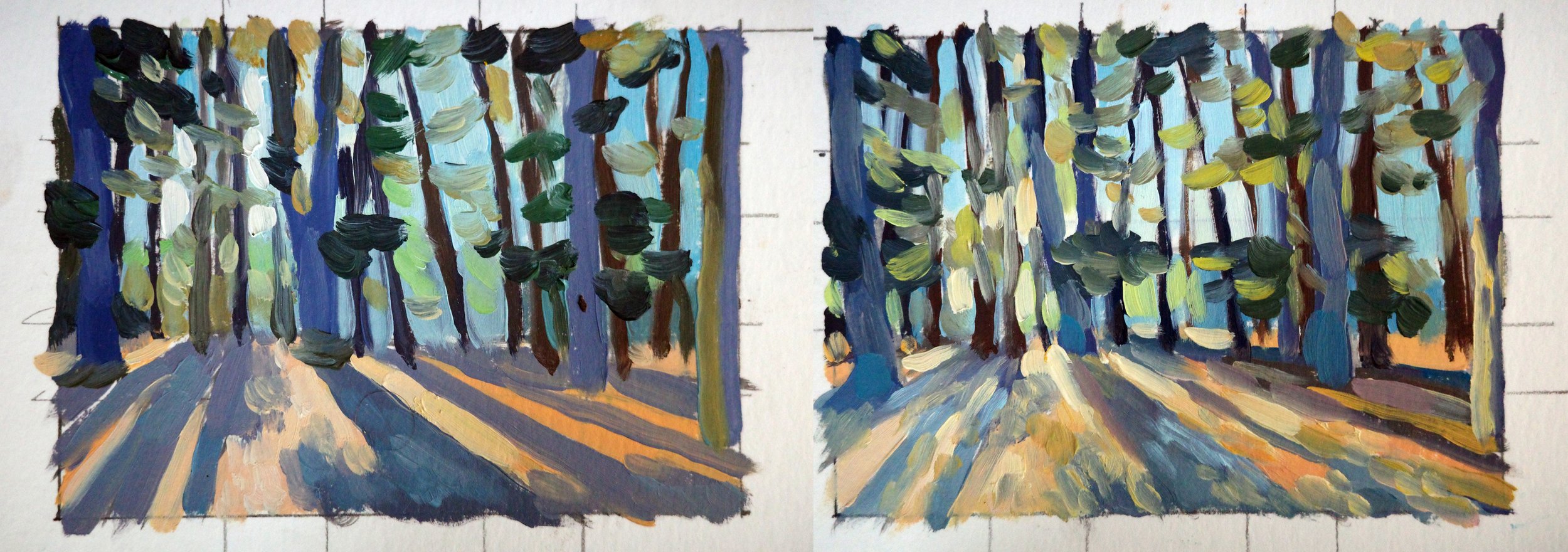
Finally, I painted these two small colour studies.
I wanted to push the orange and blue colour relationships for interest and to enhance the glow effect.
The painting process
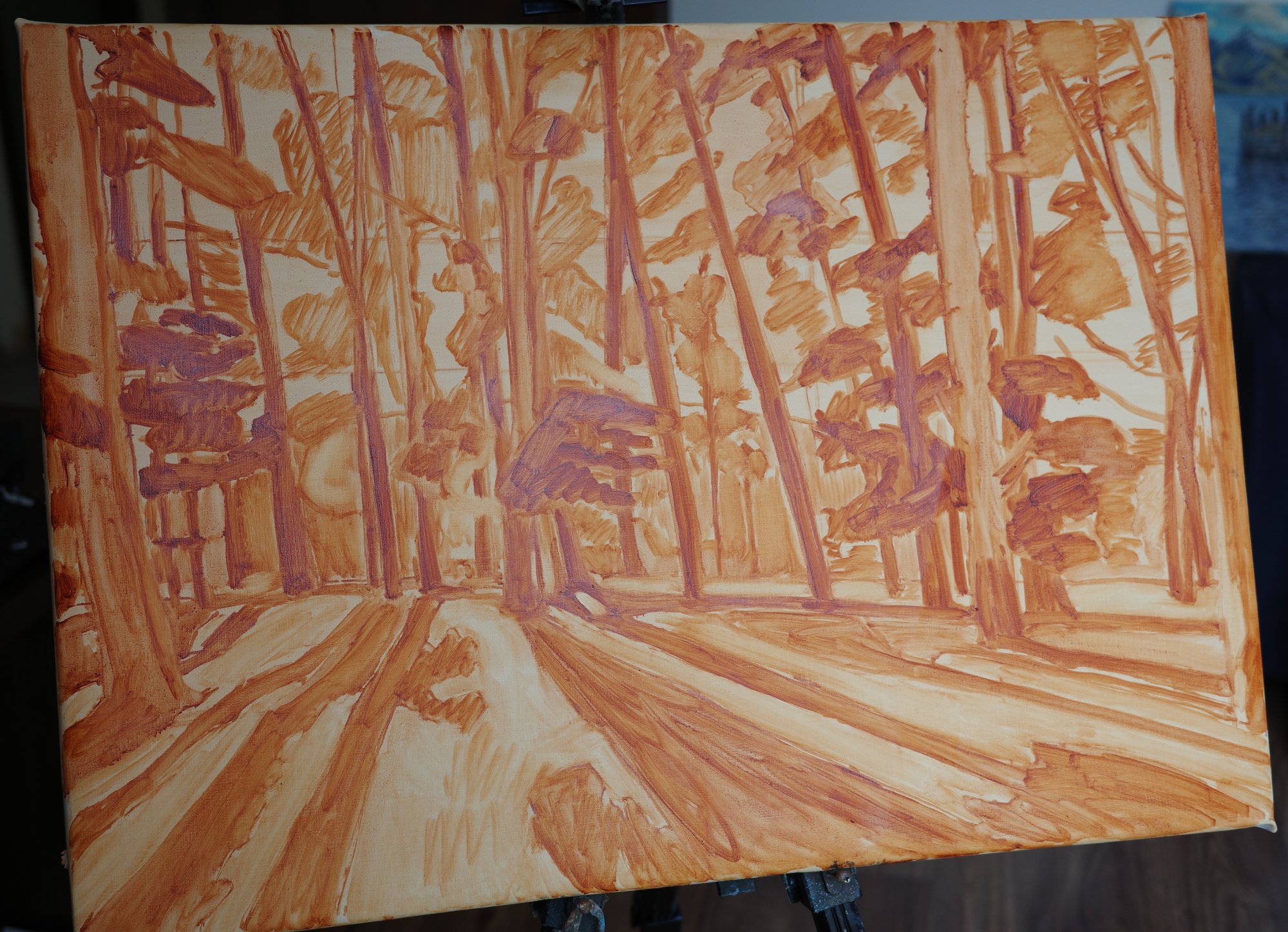
To draw in the pine needles I simplified them into clumped shapes. I find that simplification is often more challenging than painting everything I see.
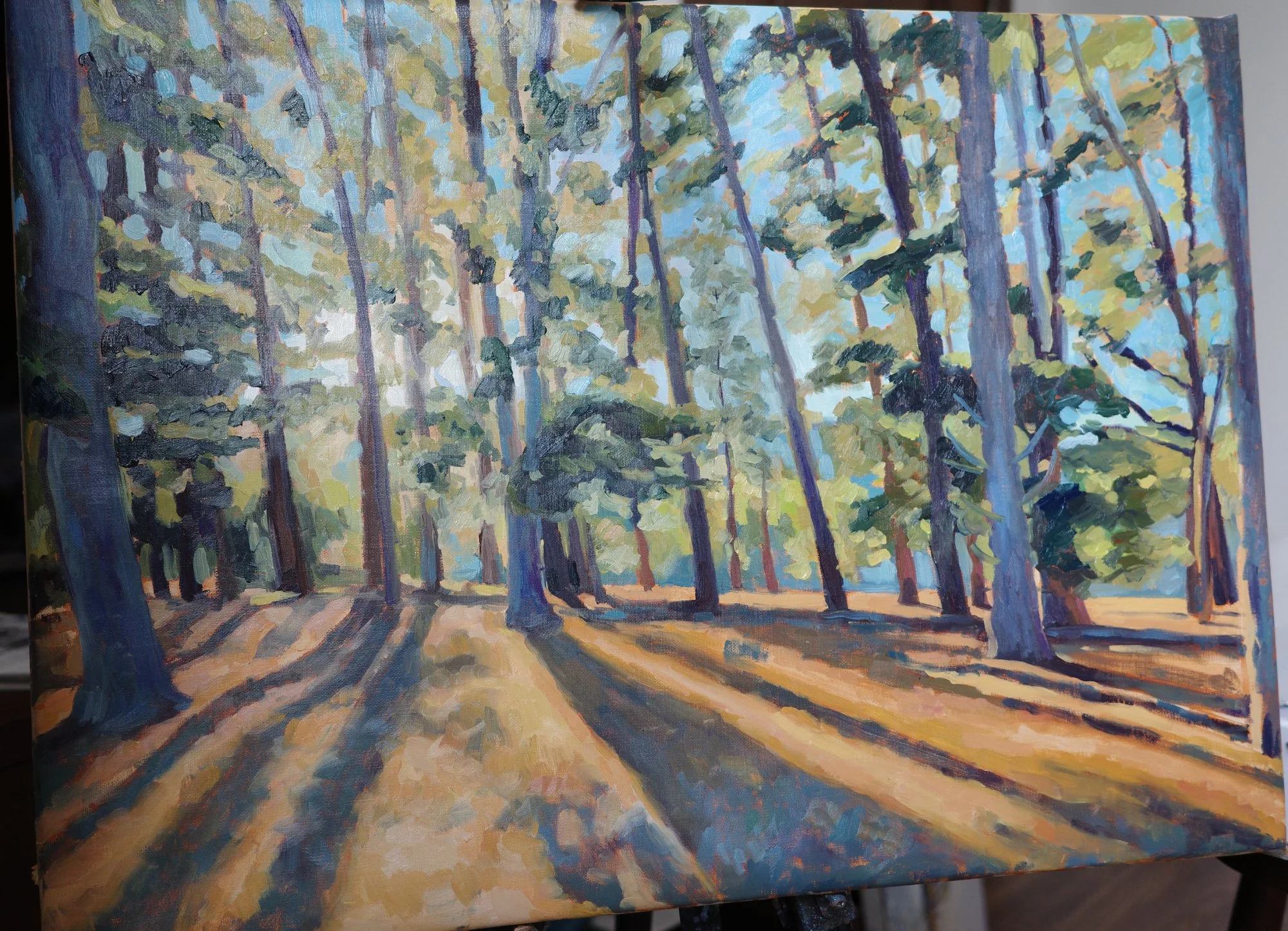
This is the painting fully blocked in with colour. The foreground trees are blue and cool and almost melt into the shadows, while the background trees are a warm brown.
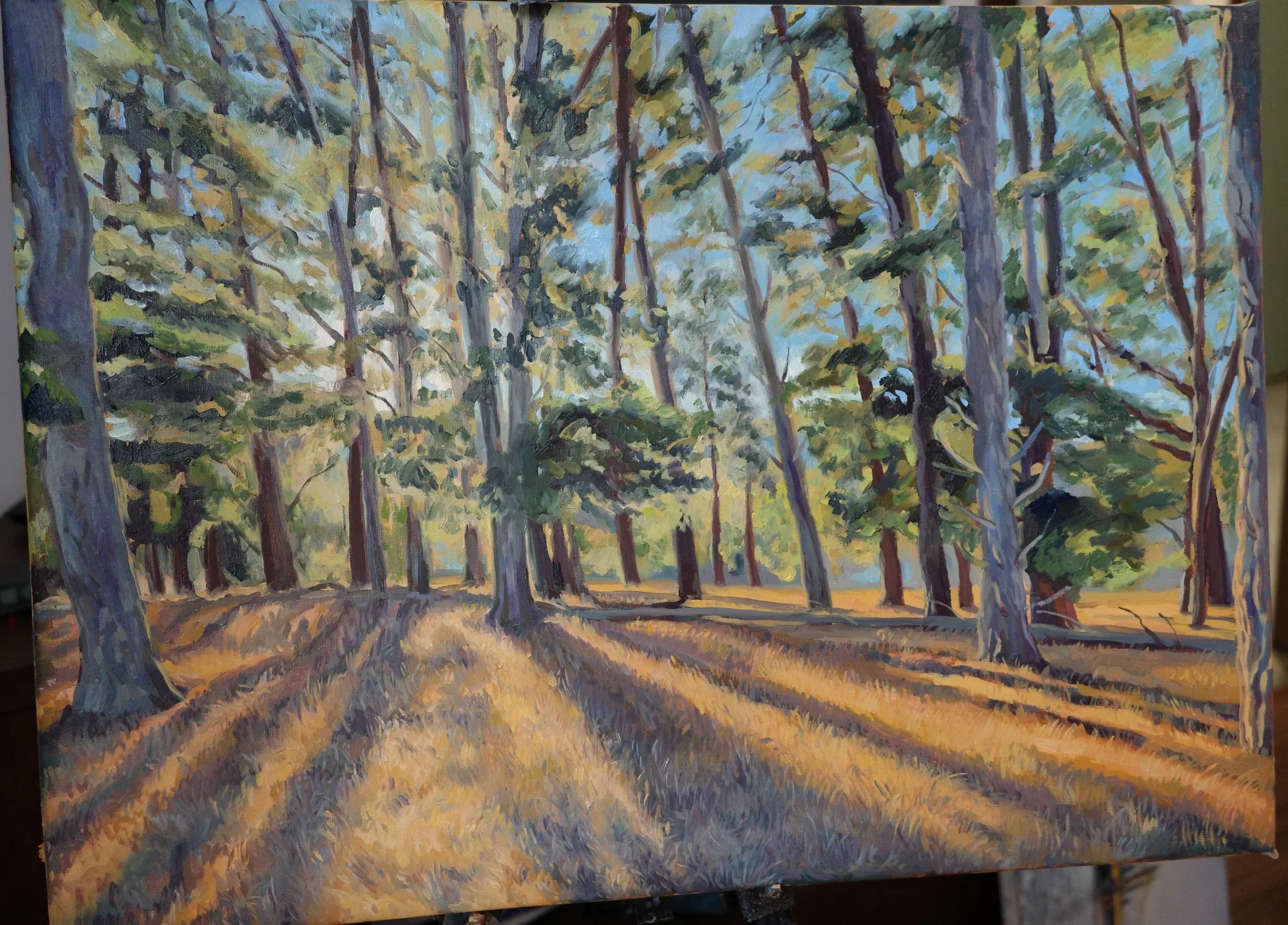
From here, I wanted to build texture in the pine needles and grasses. I built up layers of tiny dashes of various colours in the grass, not to paint each blade but to give a sense of sunlight skimming over them.
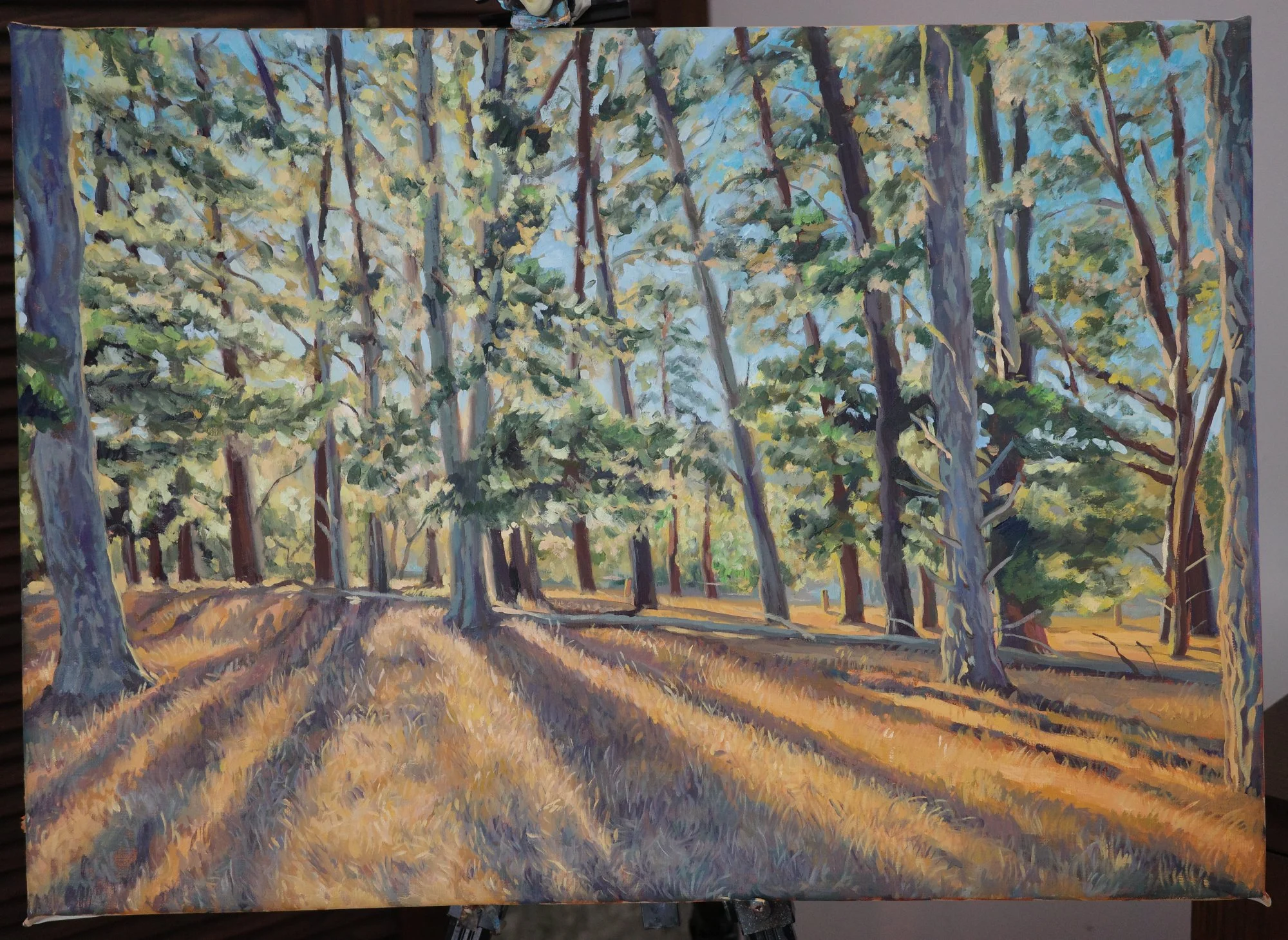
I brought highlights into the leaves for the backlit glow. This was effective for the sense of light, but started to make the whole canopy feel very busy. It all got messy and felt overworked as I alternated between layers of dark green and bright yellow.
I added in the fence line along the edge of the hill for a sense of scale and depth.
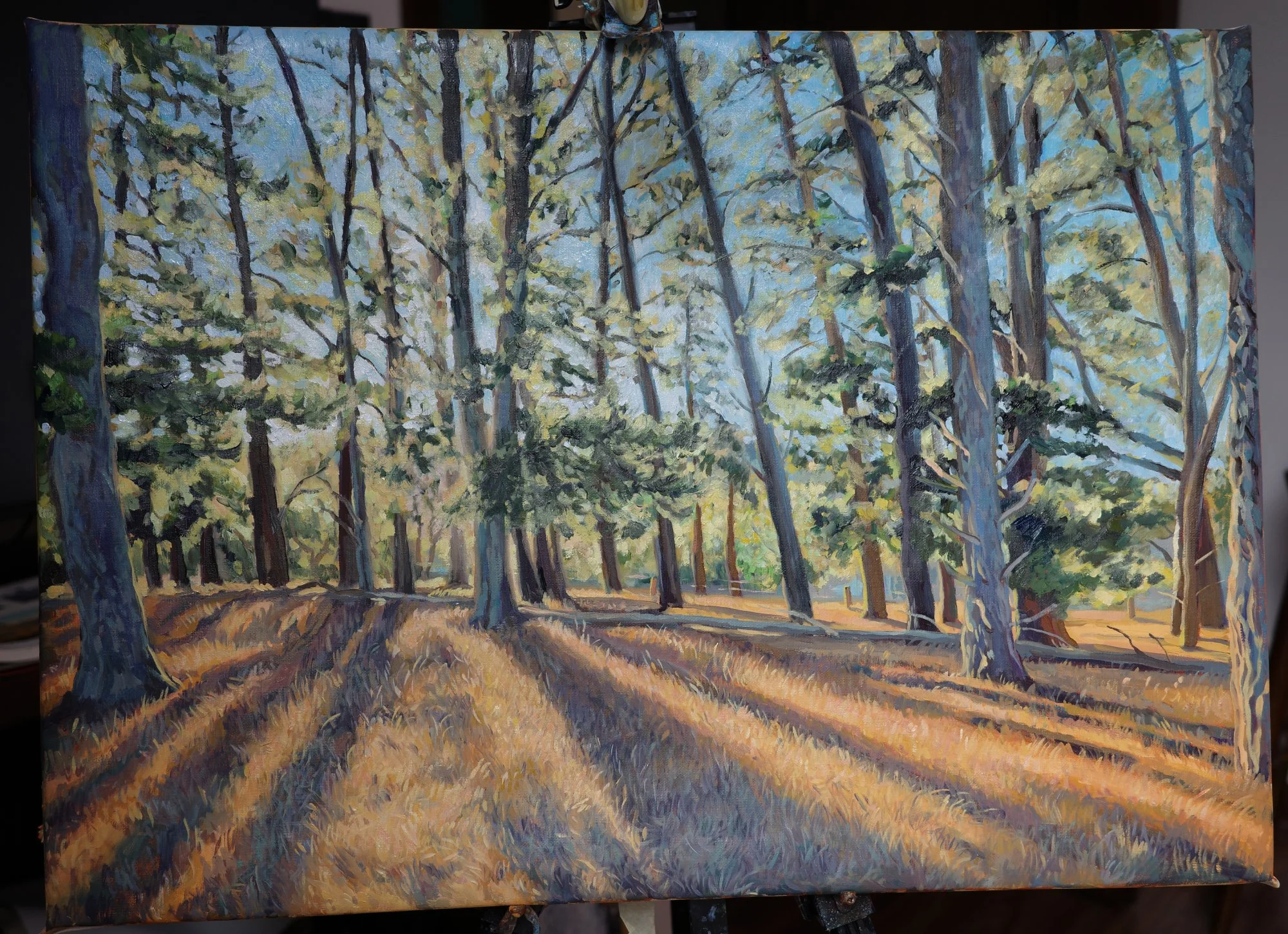
I carved the sky back into the tree canopy and eliminated entire clumps of leaves to open up the top half of the painting.
I worked on the texture of the bark in the foreground trees, and softened the edges of some of the trunks to create the sense that the light was bleeding around them. But in doing so I pushed them too light and lost the contrast with the sky.
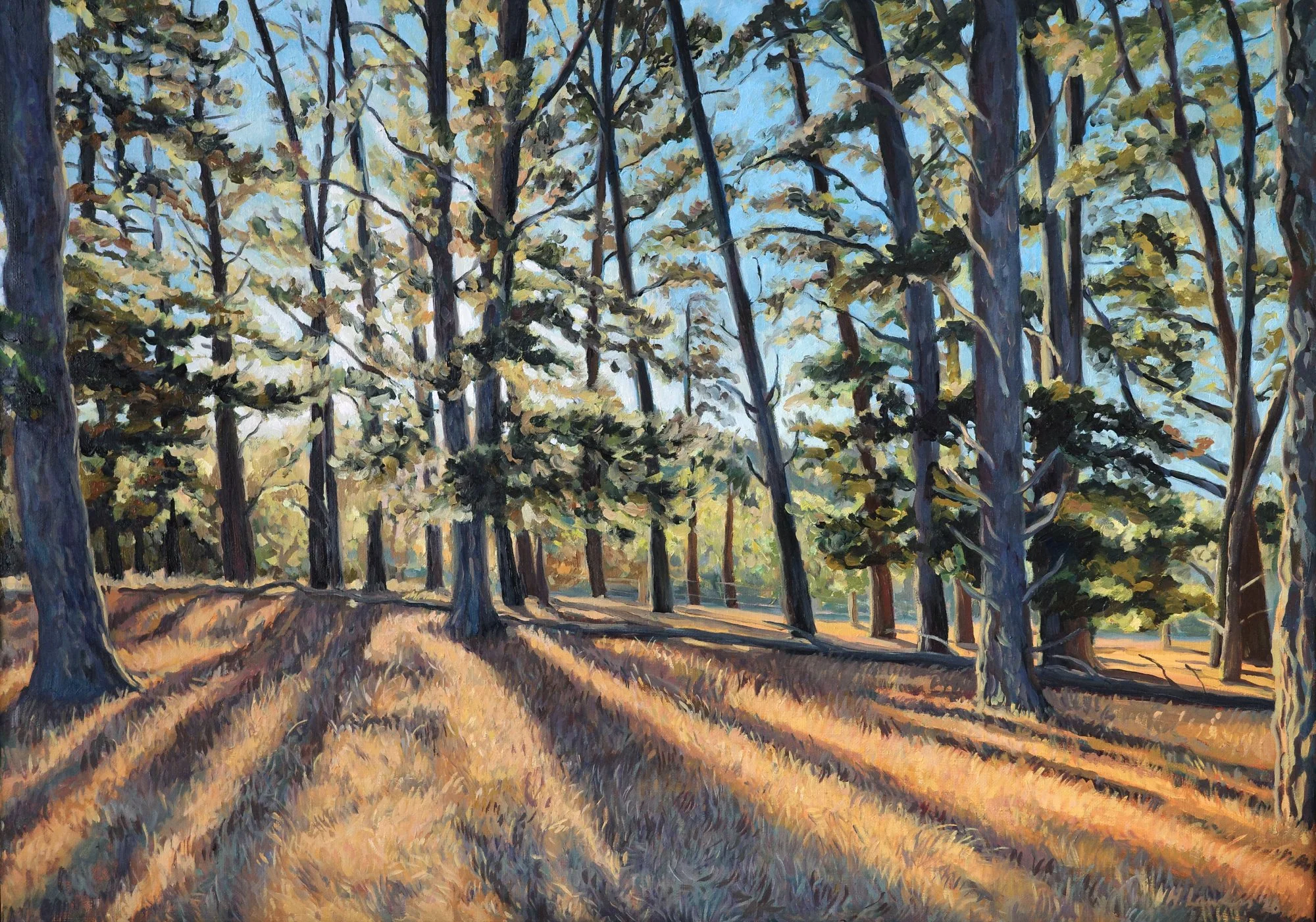
So, the final thing I needed to do was to bring the darks back into the tree trunks and foliage to make the light pop.
Finished!
"Long Evening Shadows, Adelaide Hills"
70 × 50cm, oil on linen
I particularly loved building up broken colour for variation and texture in the shadows. Pushing and pulling the darks and highlights in the trees was a frustrating challenge. In the end, that backlit glow was worth the struggle.
Details
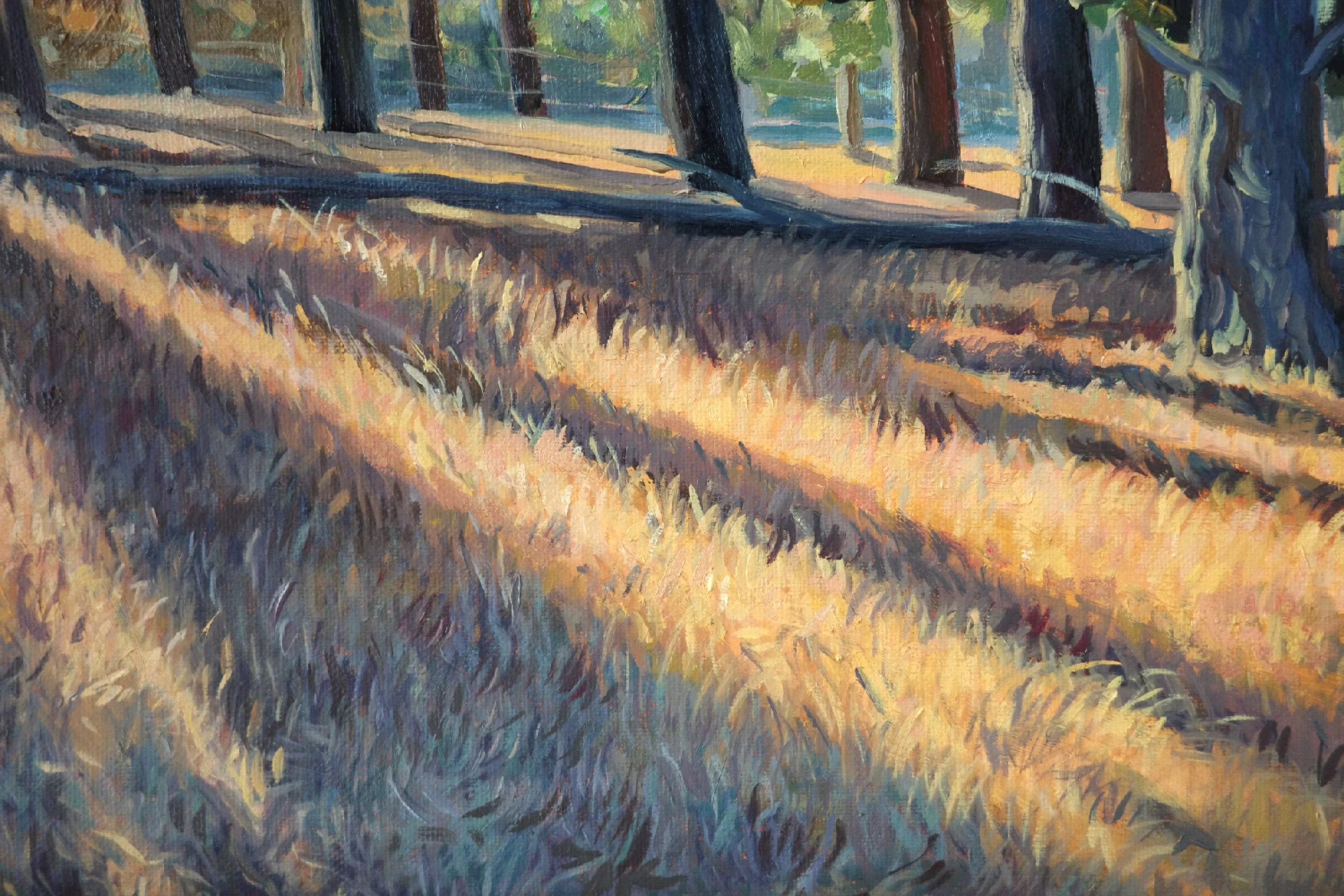
Up close you can see how almost multicoloured the grasses are, but if you step back they read as natural. I layered flicks of different colours and varied the temperature for shimmer and depth within the shadows.
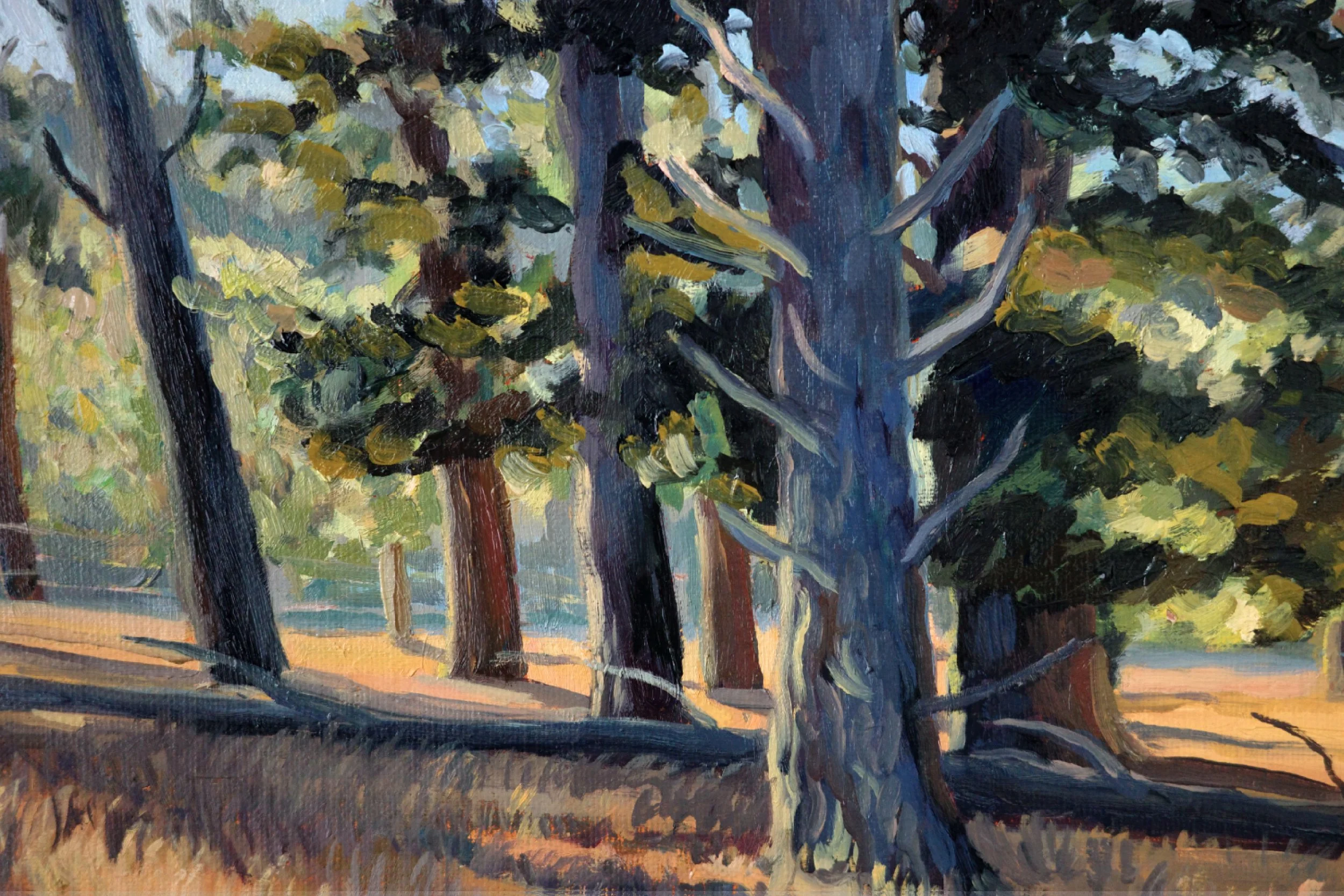
Each trunk has its own personality as the sun hits them in a unique way. The little fence post helps to emphasise just how tall these trees are.
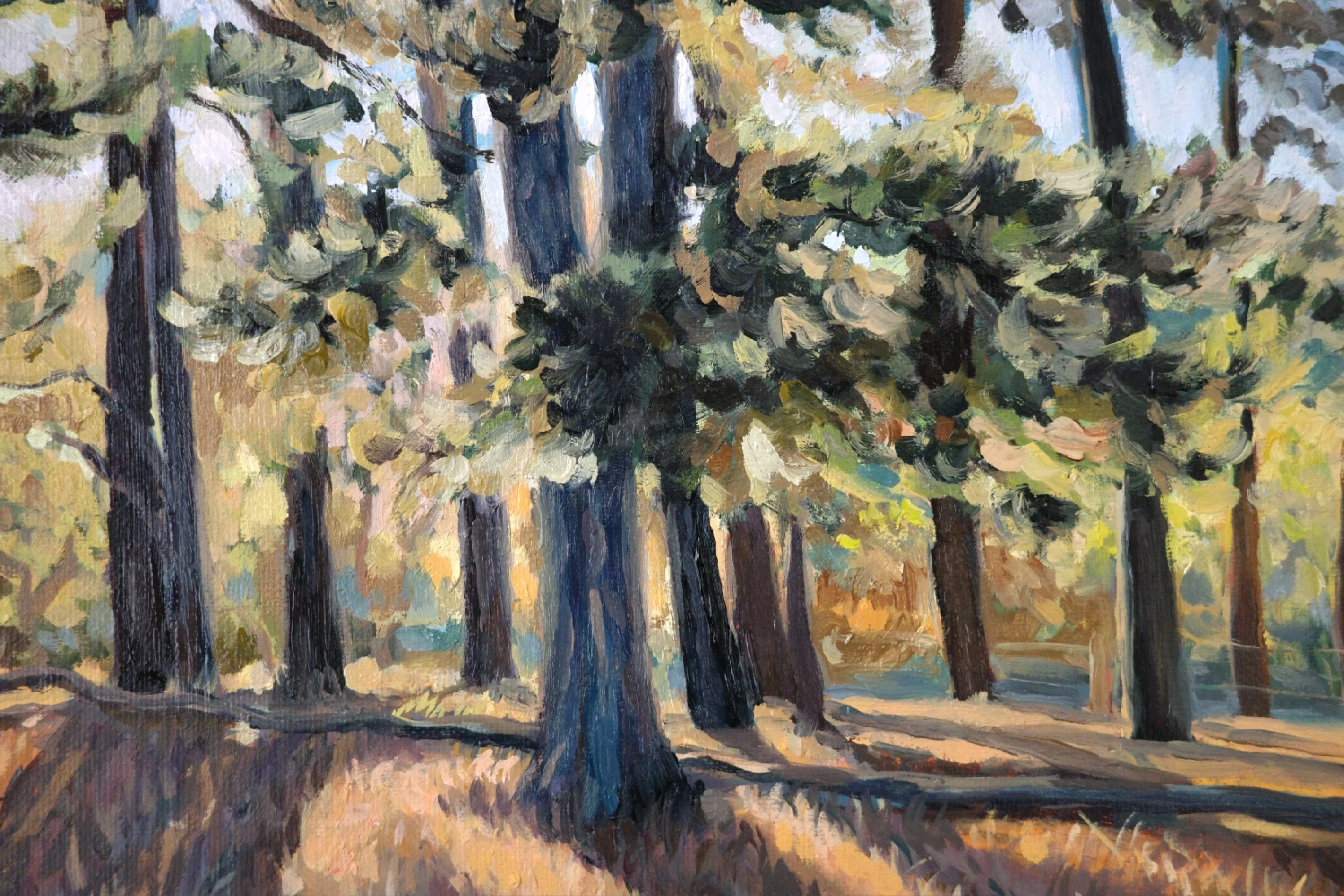
I varied the edges of the trees to capture how the light hits and bends around them. Sometimes they have a soft edge where the sun is creating almost a halo effect. Sometimes there is a blue tinge to the edge where the sun is enhancing the colour of the bark. And sometimes there's a hard edge where the tree is firmly silhouetted.
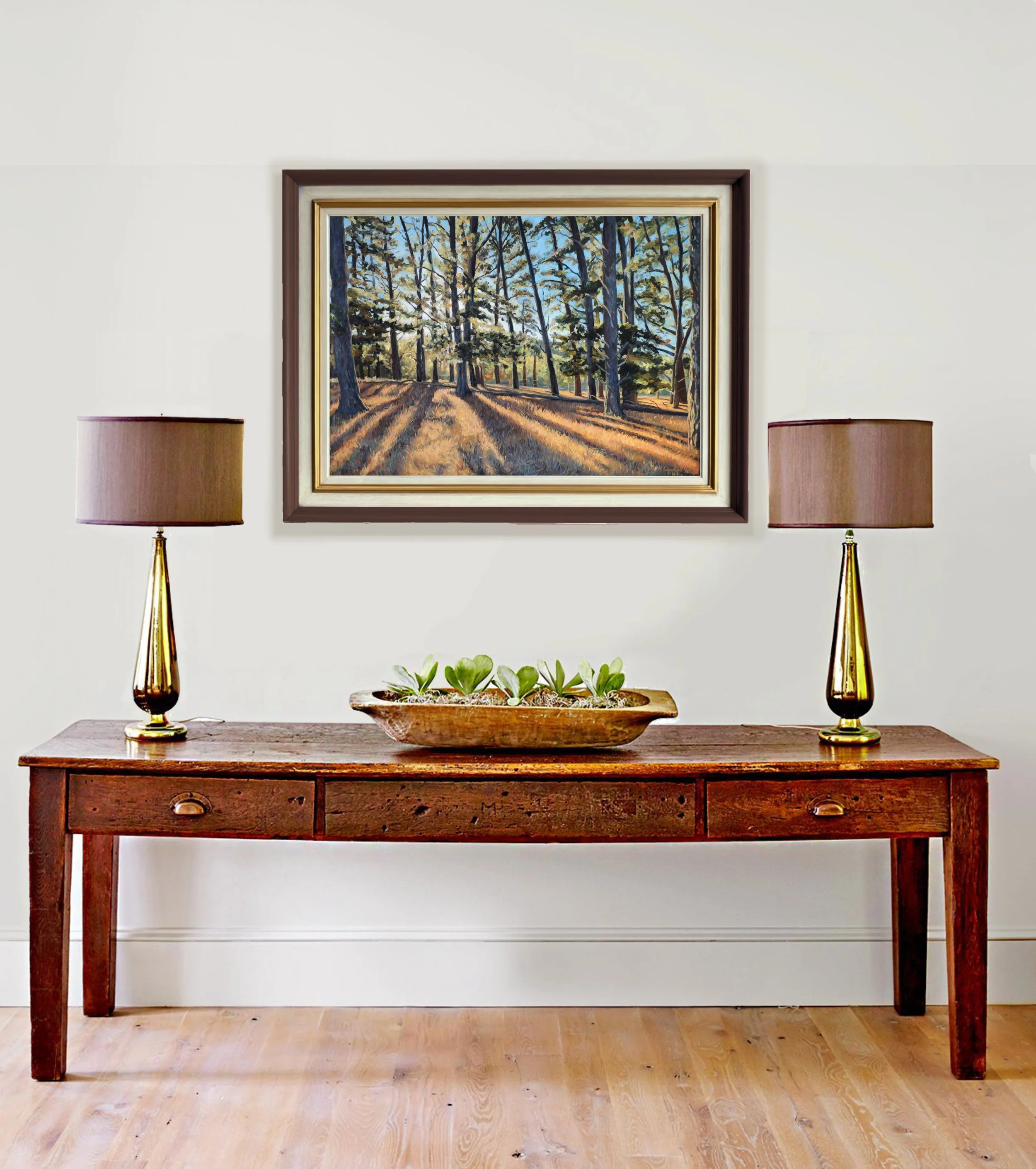
This painting is now available in my new collection, At the End of the Day.
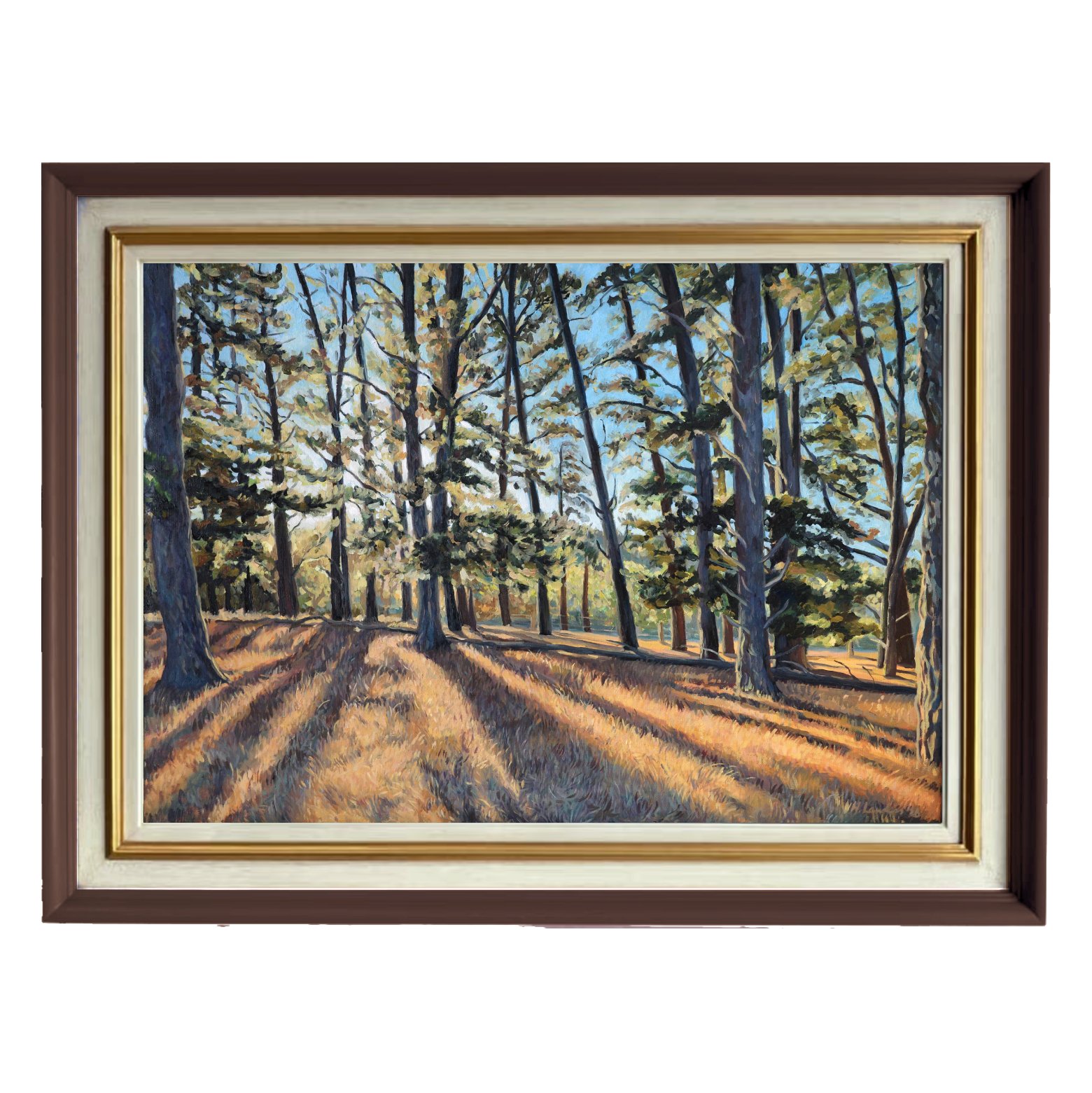
I was strolling around a vineyard just outside Lobethal when I came across the light cascading through a cluster of pine trees on its edge.
I was intrigued by the pattern created by the repeating vertical and diagonal shapes. But really, this piece is all about that low light casting bold blue shadows at the end of a hot summer's day. I can almost smell those pine trees.
Click here to see the process behind this painting
Details
Medium: Oil on linen
Size before framing: 70 × 50cm
Approx. size after framing: 90 × 70cm (depending on design)
Included With Your Painting
Your painting will arrive expertly framed and ready to hang. International shipping is included.
Discover Your Painting’s Story through a hardcover book documenting its creation, my original sketches and studies, and a signed certificate of authenticity.
How To Buy
Click “Enquire to Buy” and fill in the form. I’ll personally confirm availability, answer any questions, and send you a secure invoice.
Delivery & Returns
International delivery is included in the price. Your painting will be professionally packed and sent using a fully tracked service. Framing and shipping usually takes around 6–10 weeks after purchase, depending on the complexity of the frame design and the time of year. I will keep you updated fortnightly on the progress of the framing.
See your painting in your home. I know buying an original painting online is a big decision, particularly when you haven't been able to see it in person first. Once your painting arrives, you have 14 days to see it in your own home and make sure it's right for you.
